Kidnap in Oaxaca – Part 1

Now that I think about it, I should have suspected that something was wrong when I smelled cheap bourbon on the mechanic’s breath. But what if I had and my engine hadn’t thrown that rod on the road back down to Oaxaca? Would Saskia Martin have ever got her son back from the kidnappers in Mexico?

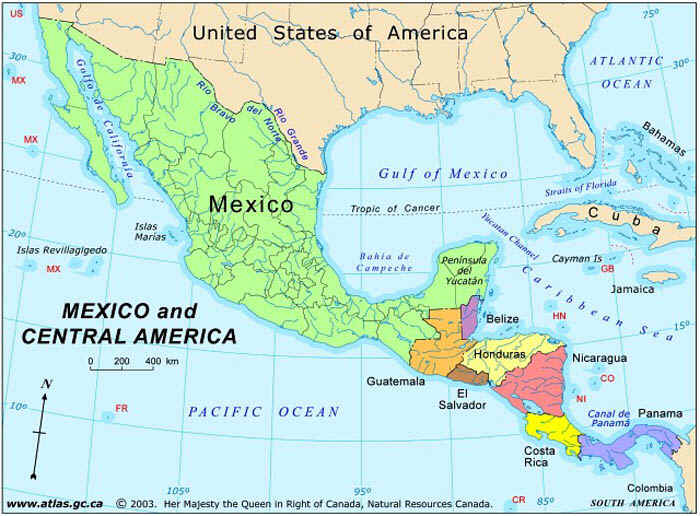
For me, the adventure started with a surfing trip to Costa Rica in January of 1972. Over a couple of Carta Blancas with my old friend and former editor, Bill Cleary, we decided to throw a few surfboards on his VW campervan, load up with camping gear and provisions, and surf ourselves silly in Southern Mexico and Central America.

Looking back on it now, it is difficult for me to think of all this as having happened over 30 years ago. Or that the 3-and-a-half year old boy that I helped to reunite with his mother would be a grown man, possibly with children of his own. It’s also difficult for anyone who hasn’t driven from Malibu, California to San Jose, Costa Rica and back to understand just how dangerous and exciting it was in those days. But it was, and probably still is.

This first trip lasted nearly two months. After surfing in El Salvador and Costa Rica’s Nicoyan Peninsula, and exploring almost as far south as Panama, Bill felt that it was time for him to return home to catch up with his young son Omar. On the way back up through Central America, I was offered a management job at a large international hotel in El Salvador. So we headed straight back to Malibu where I planned to grab some appropriate clothes, stock up on a few essentials (like an efficient ice-chest) and return to San Salvador in my trusty VW bug.
My mistake was taking the car to a local Volkswagen dealership to have a thorough mechanical checkup, including tune-up and oil & lube. It was a mistake because I normally did my own basic maintenance to ensure the valves were adjusted properly so the air-cooled VW engine didn’t get a chance to overheat. I also knew that VW dealerships – for reasons best known to them – generally tended to adjust the valves too tightly. Which is why I made a point of asking for the setting I preferred. Bottom line: I was in such a hurry that I didn’t follow my ‘little voice’ when it warned me to double check the valve settings – especially after I smelled alcohol on the mechanic’s breath when I picked it up.

Never mind. It was all part of the ongoing adventure. And although my journey from Malibu to San Diego and across the bottom of Arizona to El Paso and Juárez went without a hitch, I experienced something I’ll never forget on the road between Chihauhau and Durango.

I’d been driving almost nonstop since sunrise. When the desert sky started showing streaks of red, I picked an area with nothing but cactus and scrub to be seen for miles, and pulled off the highway to set up camp.

The air cooled quickly after the spectacular light show faded. I downed a couple of chilled beers, scarfed some cheese and crackers, and heated up a can vegetable soup. Assembling my sturdy army surplus cot, I squeezed insect repellent on each of the wooden legs, erected a makeshift awning consisting of an army surplus pancho and stretched it over the passenger door and an old telescoping tent pole. Settling down in my sleeping bag for an early night I tucked my small, nine-shot .22 automatic snugly under the pillow.

As usual when camping out, the next morning began abruptly with sunrise. But unlike any previous morning of my life, I awoke to find my self lying in a semicircle made up of 40 or more people.

It was the silence that hit me first. Then, after I put on my glasses, the total lack of expression on anyone’s face. They didn’t look friendly. They didn’t look unfriendly. They just looked – straight at me. It seemed so very strange, unreal … surreal. Men and women of varying ages from old to young, and children from babies wrapped in brightly woven blankets carried by their mothers, to children aged 12 or so. It could have been a large family gathering for all I knew.

With some difficulty, I slipped on my jeans while still in my sleeping bag. I must have looked something like a large heaving caterpillar. Then I slipped into my ‘flip-flops’ and stood up slowly. A few men exchanged looks at that point and for the first time I realized that all of these people were Indians and that I was at least a foot and half taller than the tallest of them.

I smiled and said ‘good morning’ in my best Spanish, and only the men replied, some removing their hats and bowing slightly. Taking my cue, I also bowed and that seemed to go down quite well. Then I rummaged around the back seat to find the large plastic bag full of brightly wrapped candies I usually carry when I travel South. Grabbing a handful I offered them to the children.

Hesitantly, the children looked up to the adults and after receiving some sort of silent approval, rushed forward to form an even smaller semicircle close to the car. At first they were very shy and wouldn’t look at me directly. But as I placed the candies in each little hand the child would smile deeply into my eyes, say, “Gracias, señor,” and for some inexplicable reason, hop once in the air before rushing back to their place in the crowd.

By that time all of the people were beginning to smile and talk quietly among themselves. But still they kept their distance. Then a large dusty bus bounced off the highway and stopped a short distance away. All at once the silence was broken. And in what appeared to be a synchronized flurry of activity, baskets were heaved onto heads, small children lifted onto hips and every member of the group gave me a big smile and shouted their blessings for a safe journey before boarding the bus. Then they were gone.

Standing there in the cool morning air I looked around and around, and all I could see was flat empty desert stretching to distant pink-hued mountains. To this day I have no idea of where those forty or so people came from or where the were going.

Kidnap in Oaxaca © Robert R. Feigel 2022 – All Rights Reserved

Chance Encounters #2

For me a chance encounter with someone famous has to include the exchange of greetings at the very least. Just passing them on the street or sitting in the same restaurant doesn’t count.

My chance encounter with Martin Sheen was outside the Malibu House of Health, Malibu’s only health food store back in the 70s. He wasn’t particularly friendly. A bit gruff actually. But at least he managed to hello.

Actor James Woods in downtown Auckland was a lot friendlier and he said hello first when we passed each other. My encounter with Patrick Macnee was strange. I was admiring a Patek Phillipe watch in the Queen Street window of one of Auckland’s most expensive jewelers when I saw Patrick Macnee’s reflection. He’d come up next to me and we exchanged a few words about the watch and I ventured a question about why he was in New Zealand. Work and pleasure was his answer. He was working on a film and hoped to get some sightseeing in as well.

If any of you have been to the English seaside city of Brighton and eaten in the legendary English’s Seafood Restaurant and Oyster Bar you’ll know how small and crowded it is. My wife’s late-aunt had treated us to an expense paid lobster lunch there on one of our UK visits. Derek Jacobi and Donald Sinden were chowing down at the bar and acknowledged us as mannered English people do wehn we passed them on our way to be seated in the tiny elbow-to-elbow, knee-to-knee dining room. We had a lobster each and enjoyed every last morsel.

A few weeks later Donald Sinden happened to park his Rolls Royce Phantom VI in front of our rental car (a Peugeot 406) in Stafford-Upon-Avon and walked us to the Royal Shakespeare Theatre for his magnificent performance as “Chorus” in King Henri V. We parted company as he headed for the cast entrance and we carried on to present our tickets (again, courtesy of Anne’s aunt Margaret). We talked all the way and laughed a fair bit too.

Years earlier, again in Auckland, I was surprised to run into the by then notorious, Kim Fowley. Kim and I had met in Hollywood and shared a few experiences in the “music scene.” We weren’t friends, but there were times we’d been useful to each other.

My future wife was still New Zealand’s top fashion model and, since the sudden death of her husband, was managing the country’s top modeling, casting and event agency – June Dally Watkins. The office was in Auckland’s CBD and Anne and I had met when I went into the agency to apply for a script writing job for one of the major events the agency handled.

At the time Anne and I were still in the early stages of our relationship and I was living not far away in a B&B near the campus of Auckland University. Kim made one of his grand entrances while I was at the agency and Kim insisted we go out on the town to catch up. He’d been in Australia promoting a new album or something – probably mainly himself – when he decided to fly over “the ditch” to check out the opportunities in New Zealand. June Dally Watkins NZ was an offshoot of its sister company in Australia so he’d arrived with an introduction and a return ticket.

As always, Kim right in the center.

Kim and I spent the next 24 hours going to clubs, parties, the legendary Auckland ‘White Lady’ food truck and places I can’t remember or shouldn’t. He never stopped, but I had to so we parted company so he could continue his rounds. I don’t think Auckland knew what hit it like a tornado.

This may be his last published interview and can tell you a lot more about him than I ever could:

https://www.rockcellarmagazine.com/is-this-the-last-kim-fowley-interview-ever/

Chance Encounters #2 © Robert R. Feigel 2022 – All Rights Reserved
Chance Encounters #1

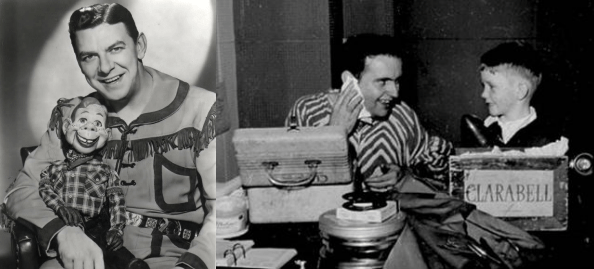
Chance Encounters #Not all of my brushes with famous people happened in California. One of my earliest encounters was in an NBC studio in Rockefeller Center in New York City in the early 50s. My dad was somehow able to get me a ticket to sit in the ‘Peanut Gallery’ of the Howdy Doody Show, which was one of my favorites on television.

I nearly missed out because when we got to the lobby there were two lines of kids. One for the Rootie Kazootie Club show and the other for Howdy Doody. The uniformed attendant’s New York accent was so strong that we stood in the Rootie Kazootie line before the last call for the Howdy Doody Show was announced and I was the last one in line with a ticket. As such I was also the last one seated in the Peanut Gallery – top row on the end.

It was my first time in a television studio and a bit of a disappointment at first. I’d envisaged being part of what I saw on television instead of sitting in a big room full of cables, huge cameras, sound booms and busy people with clipboards. The only thing that was familiar was the puppet theatre, and even that seemed a lot smaller than I expected.

But any disappointment was soon dispelled by watching all of the activities going on in the studio and seeing that everyone and everything played a part in making the show what it was when it finally made it to my television at home. It was a realization that turned into a fascination that helped me many years later when I appeared on television and produced a number of the commercials and videos I’d written for clients. I helped me to see how the magic was created.

As the activity calmed down and the players started taking their places on the set an older, fat kid told me and the other kids in my row to move over to make room for him. We did and he took over my place on the end. Then we were all told to keep quiet until asked to cheer by one of the guys with a clipboard.

A red light went on over the door we’d entered through and the show was on air.

L-R: Howdy Doody and Buffalo Bob Smith, Bob Keeshan and unkown kid.

Buffalo Bob Smith made his appearance after sitting near the set when we entered. This was the first time he’d said hello or acknowledged us and we had to cheer. I didn’t get the feeling that he was even looking at us. From then on the show seemed to click along as scripted with the Peanut Gallery’s only function being to cheer on cue. That too was a disappointment because I always thought the kids in the Peanut Gallery were more involved.

Clarabell the clown was played by Bob Keeshan (later Captain Kangaroo). He too was a disappointment. His clown makeup stopped just above the neck of his ruffled collar. Since most of his shots were to camera and his back was turned towards the Peanut Gallery we could clearly see a band of his pale skin where the makeup was missing. Then that ruffle must have been uncomfortable to wear in all the heat from the stage lighting.

The fat kid sitting next to me kept squirming and demanding more room. He was also making rude comments directed at Clarabell. At one point he elbowed me and said, “Watch this,” and pulled out a peashooter from his shirt. After putting some ammunition in his mouth he aimed it at Clarabell and let go.

The first couple of shots missed but the first one to connect hit Clarabell just above he hairline of the scalp piece he was wearing as part of his makeup. I imagine it didn’t hurt because Clarabell swatted by the back of his head as if a fly had landed on his head. And there were a lot of flies in the studio. He didn’t even turn around.

Fat boy’s aim got better and he was finally able to hit Clarabell on the back of his neck and this time Bob Keeshan did turn around and saw the kid try and hide the peashooter and fail.

The show must go on and it did until there was a break. Clarabell stormed over to the Peanut Gallery using expletives I’d only hear before at summer camp and from a NYC taxi driver when my stepmom drove the wrong way on a one-way street. It was very enlightening.

The fat kid started talking back and Clarabell told him that if he tried that again he take him out back a beat the “holy living shit” out of him. Fat Boy, now in tears, countered this by saying that his father was an important NBC executive and would have Clarabell fired for this.

Just as quickly as it happened it was over and Clarabell was back in character and honking his horn as the show continued. However, fat boy didn’t do anything further and we were all given a bag of gifts as we left.

None of the cast ever said a word to any of us and the gifts consisted of sample tube of a sponsor’s toothpaste, a toothbrush some cards with the show’s characters printed on them and some other stuff I don’t remember. Hardly memorable.

I’ve read that a year or so later, Bob Keeshan left the show. Speculation was that he was fired. I’ve always wondered it Fab Boy’s father really was an NBC bigwig and he’d gotten his revenge.

Chance Encounters #1 © Robert R. Feigel 2022 – All Rights Reserved

The Fast Lane

Once I got caught up in my new role of interviewing celebrities my life changed dramatically and at times overwhelmingly. In the brief few months I was on the job I interviewed:

Barry McGuire

The Grass Roots

The Leaves

The Turtles

The Byrds

The Seeds

Gary Lewis and the Playboys

David McCallum

Peter Falk

Sonny & Cher

Peter Noone (of Herman and the Hermits)

Alan Young, Connie Hines and the voice of Mr Ed, Allan Lane (Mister Ed)

Arthur Lee and LOVE

I didn’t interview Keith Moon of the WHO, but we did spend some time considering the absurdities of life one evening while sharing a joint. To a certain degree the same could be said about my long, serious conversation with singer and actor, Tommy Sands, at The Trip after I’d interviewed Barry McGuire.

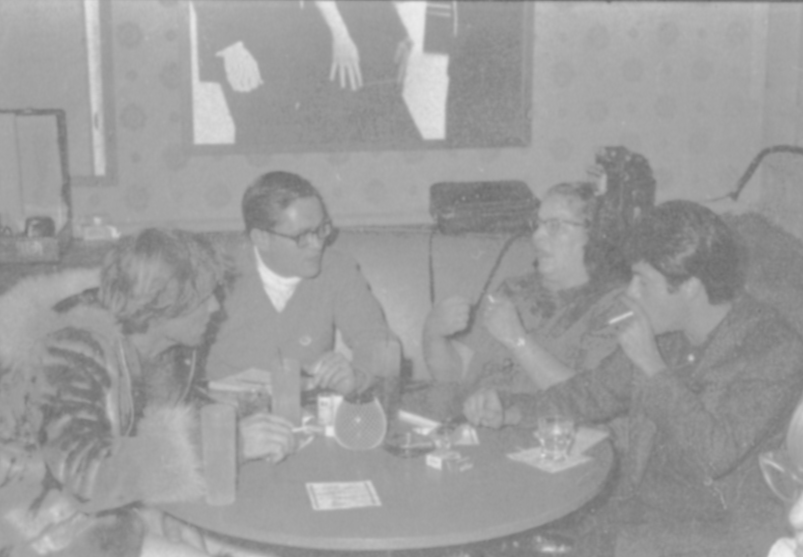
Singer/Actor Tommy Sands and I having a deep discussion at The Trip.
Photo: Darryl Kniss for KRLA BEAT
L-R: Barry McGuire, me, Jeanie Castle (my manager) and Tommy Sands
at The Trip after I’d interviewed Barry for the KRLA BEAT.
Photo: Darryl Kniss

Then all I can say about the times I spent with ‘Madman About Town’ Kim Fowley was that they were manic. The times were changing rapidly and beyond my ability to keep up with them. Hollywood was teaming with eccentricities and creativity.

At parties my new job got me invited to I rubbed shoulders with Joan Baez, the WHO, Peter Fonda, Bob Dylan and a myriad of familiar faces whose names now escape me.

And over the years I’ve met Jim Morrison, Robbie Robertson and his wife Monique, Bob Dylan, Neil Diamond, Burgess Meredith, Larry Hagman, Jan Michael Vincent, Angela Lansbury, Steve Allen, Rod Steiger, Robert Wagner, Pat O’Brien, Anna May Wong, George McCreedy, Rob Laver, Bruce Dern, Sherman Hemsley, Christopher St John, Leo Carrillo, Vincent Price, Edith Barrett, Leonard Nimoy, Adella Rogers St John, Bobby Driscoll, Glen Ford, Frank Lovejoy, Daryl Dragon, Jan & Dean, Bruce Johnston, Terry Melcher, Martin Sheen, Annette Funicello, Max Baer Jr, Donna Douglas, Sharon Tate, Doug McClure, Jay Sebring, Robert Mitchum, Sir Donald Sinden, Victor Bruno, Donovan, Spade Cooley, Liberace, ‘Lord’ James Blears, Victor Mature, William Boyd, Pres Richard Nixon, Gov Earl Warren, Sherriff Gene Biscailuz, Gov Robert D Branigin, Sen Vance Hartke, Baba Ram Das, Governor-General Sir Paul Reeves, Sir Howard Morrison, Sir Edmond Hillary and Duke Kahanamoku.

Now that the name dropping is over I’ll describe some of these encounters in more detail as I continue to add to my book/blog because each was special – including the riot at the Rolling Stones’ performance in Long Beach after it was shut down by the police.

The Fast Lane © Robert R. Feigel 2022 – All Rights Reserved
THE TRIP

On the Sunset Strip

Fake IDs were easy to get when I was in high school because a California drivers license wasn’t difficult to counterfeit. Not that I was ever asked for mine. In fact, I was only asked for any proof of age when I was 26 and had a legitimate drivers license.

But having a fake ID helped me feel confident about going to places like The Lighthouse in Hermosa Beach when I was still in my mid-teens. Those early experiences also helped me navigate around the various venues in Hollywood and West Hollywood when I was older.

As a result, most of my celebrity interviews took place on ‘The Strip’. And most of those at The Trip, just up Sunset from the Playboy Club.

I’d done a few phone interviews as well. One with actor, musician David McCallum during his ‘Man From Uncle’ days. And one with actor Peter Falk during his “The Great Race’ and ‘The Trial of O’Brien’ TV runs. Both were good interviews but it was the face-to-face interviews that were the best.

The first interview I did at The Trip was with Barry McGuire while his ‘Eve of Destruction’ was flying high. I also interviewed The Trip’s house band ‘The Grass Roots’.

Barry McGuire chilling out backstage at The Trip.
Photo by Darryl Kniss for KRLA BEAT.
The Grass Roots. House band at The Trip. The name on the drum was a mistake made.
by the person who painted it on. It was eventually corrected.
Photo by Darryl Kniss for KRLA BEAT.

But of all the interviews I did at The Trip the one with The Byrds stood out the most.

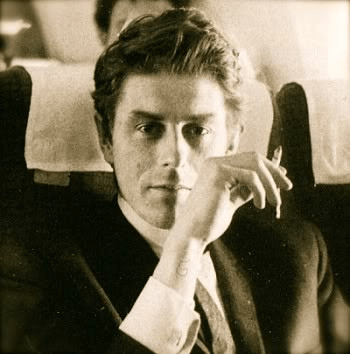
That’s probably because of the way it came into being after a phone call from the Beatles former press officer, Derek Taylor.

Derek Taylor – handsome, debonair and sophisticated.

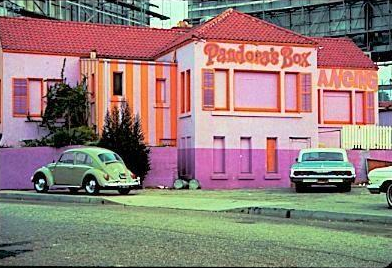
He’d read a few of my interviews and liked the way I asked what he said were “intelligent questions and not about what bubblegum they chewed or their favorite ice cream.” He had a proposition for me and wanted us to meet at a place down Sunset called Pandora Box to discuss it.

Pandora’s Box was packed when we met. It was dark, loud and smokey. Derek was easy to spot propped up at the bar wearing tinted glasses and dressed in a perfectly tailored three piece suit holding a schooner of what looked like beer. Introductions done he offered me my first experience of Guinness Ale. “Doesn’t travel well but it’s still better than the local ‘weasel piss’.” He steered me to a quiet corner and casually took out his gold Dunhill cigarette case, clicked it open to a row of funny looking cigarettes and I took one. He explained they were Gauloises, French and “a bit stronger than your average fag.” All this before being “gay” stopped meaning merry and cheerful. (Years later I read where someone had described smoking a Gauloises like smoking camel shit. I thought it might be worse.) He lit my Gauloises with a flick of his gold Dunhill Lighter and I made a note not to whip out my Zippo and offer him a Pall Mall from my crumpled pack.

Unlike the habituates of The Trip, Pandora’s Box was filled with people who looked like they belonged in The Byrds or as backup for Sonny & Cher. Both Derek and I were the only ones dressed conservatively. Nevertheless I became aware that we’d been noticed and I realized that Derek was known in this place and being treated with a lot of respect and … awe. Yet despite his relatively formal attire, manicured fingernails, styled hair and association with music royalty there was nothing whatsoever affected about him. He was casual but confident, totally professional and put me, the new kid on the block, at ease.

Instead of cutting to the chase we simply talked. When I mentioned surfing he lit up and wanted to know more. His questions were perceptive and genuine. He really wanted to know everything about surfing and if it was too late for him to learn and enjoy it. We didn’t mention his time with the Beatles except for him saying that Brian Epstein was a “right pillock.”

When we got down to business it was brief. He was representing a group called The Byrds and wanted me to interview them for the KRLA BEAT magazine. It was to be an exclusive and not made available to any other publication. He warned me that some of the group members could be aggressively rude and uncooperative with interviewers and were generally considered to be very difficult to interview. “But I’ve set this up with them in advance so you shouldn’t have any trouble as long as you keep your questions relevant and focused on their music.” Instead of my usual 10 cents a word I’d be getting a flat $500 for the interview when it was published.

Although Derek had approved the list of questions I ran by him earlier I was nervous when the time came for the interview. I mentioned that sometimes answers would led to new questions and he repeated “Just keep your questions relevant and about music. Ask about their ‘message’.”

The KRLA BEAT wanted to assign one of their photographers but I insisted on my longtime friend, Darryl Kniss, because we’d worked together before and I knew he could get some great candid shots without being intrusive or interrupting the interview. Besides, this wasn’t the time to introduce a new component and Darryl’s calm presence would help ease my nervousness.

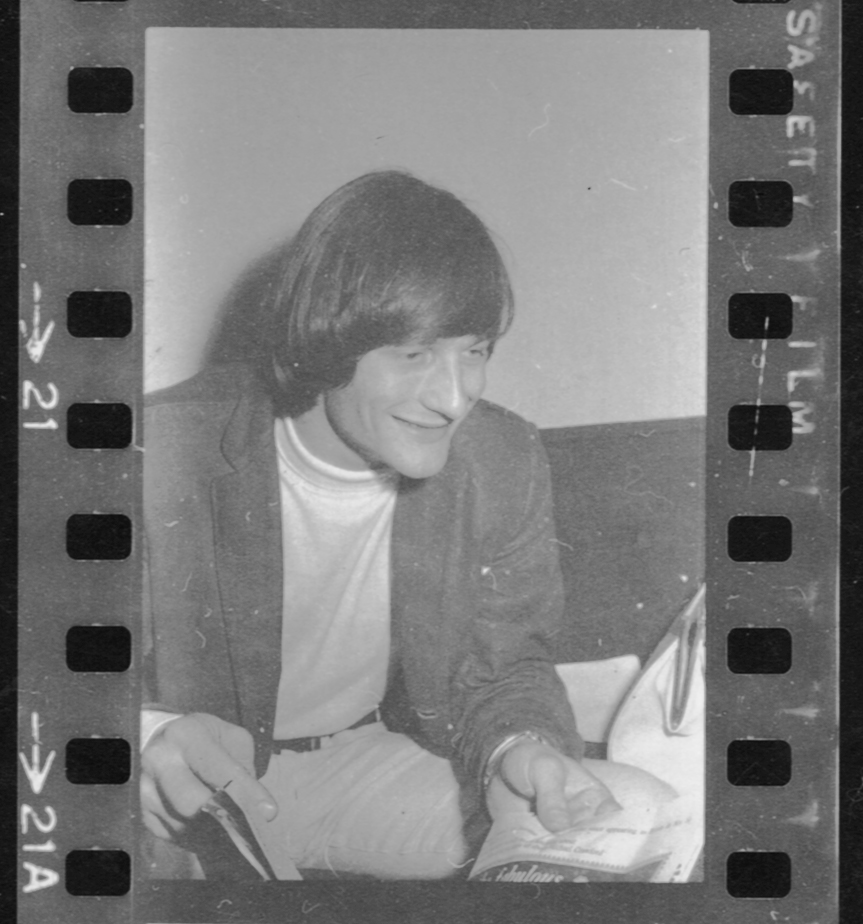
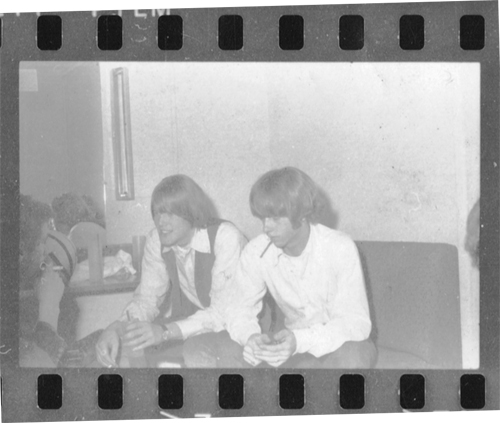
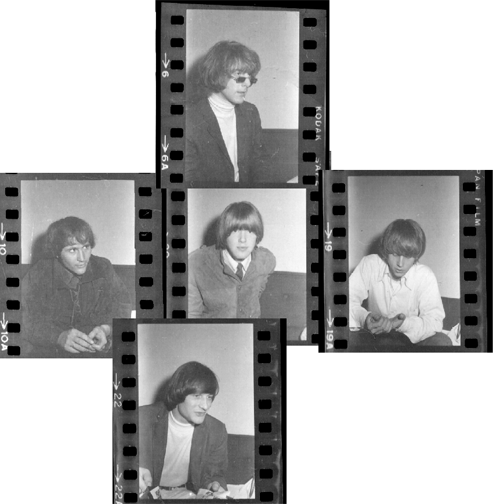
The interview took place backstage in The Trip’s small, stark dressing room. Some of the group seemed even more nervous than I was and I started to have doubts about this working out. Derek wasn’t there to do the introductions so I realized that it was going to be up to me. I introduced myself and Darryl but only Gene Clark and Jim McGuinn responded with their names. They looked over to Chris Hillman who seemed reluctant to introduce himself, followed by David Crosby who looked away from us when saying his name. Last to respond was Michael Clarke who’d been staring at his hands the entire time and appeared to be comatose. Stoned? I wondered to myself before he snapped out of his trance for a moment to sort of whisper, “Michael.”

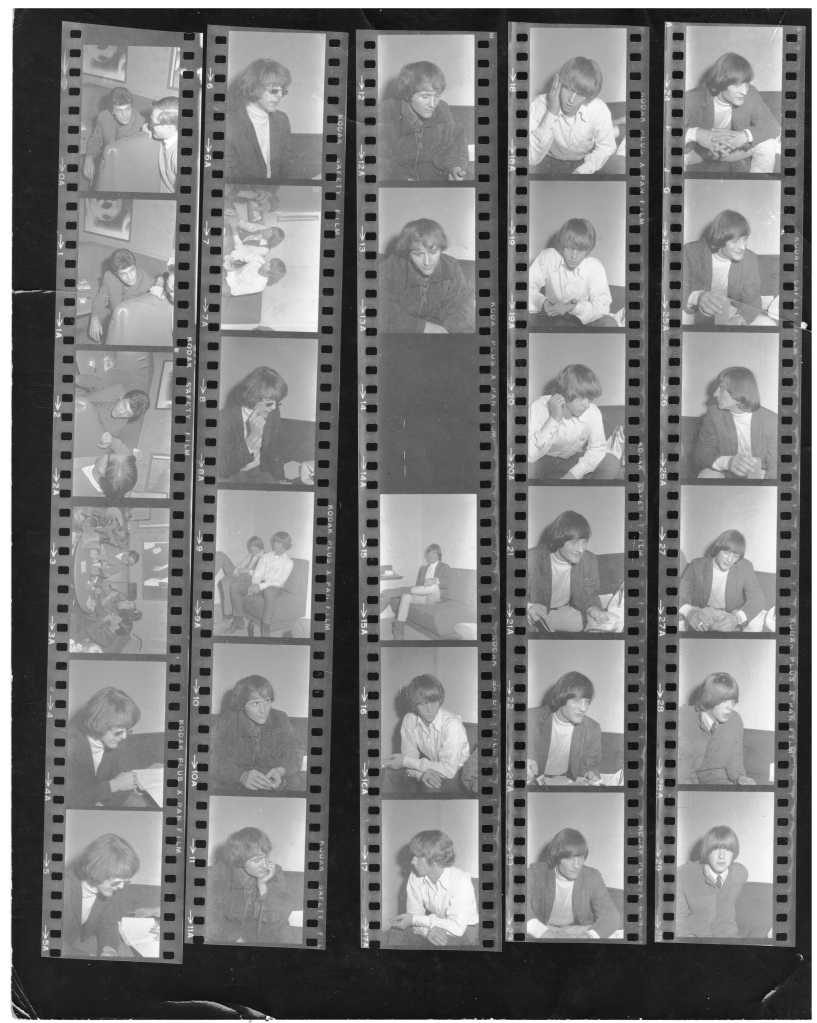
Michael Clarke scanned from proof sheet.
Photo: Darryl Kniss for KRLA BEAT

I explained that Derek had asked me to conduct the interview for KRLA BEAT and that I’d heard their previous experiences made them uncomfortable around interviewers. I asked them to please let me know if any of my questions made them squirm or thought they were stupid or inappropriate. “We can stop the interview at any time … just let me know.”

That seemed to take the chill off the room, at least from Gene, Jim and Chris. David still seemed distant and Michael completely absent.

The affable Gene Clark scanned from proof sheet.
Photo: Darryl Kniss for KRLA BEAT

Gene was the most friendly, playful and talkative. Jim was the most profound, with refreshingly introspective and astute comments and answers.

Jim McGuinn – or Roger McGuinn in later years.
Photo: Darryl Kniss for KRLA BEAT

Chris was intense, but brief.

Chris Hillman.
Photo: Darryl Kniss for KRLA BEAT

David was surprisingly articulate and thoughtful. And And Michael seemed preoccupied elsewhere like a precocious child who’d been asked to leave the kids’ table join the adults. His answers were enigmatic.

David Crosby.
Photo: Darryl Kniss for KRLA BEAT

Partway through the interview the door opened and in blew a flurry of energy named Donovan Leitch, wearing bright, cheerful clothes topped with a jaunty cap. He seemed a bit breathless and leaned on a small table to catch his breath before looking up and seeing us strangers. He looked around quickly, told Gene and Jim (who’d been sitting together at one end of the room) that he’d just popped in from his gig up The Strip to say hello, could see they were busy, would catch up with them and just as quickly left.

Photo: Darryl Kniss for KRLA BEAT

Gene told us that it was their friend Donovan from Scotland and that he was performing just up the road and that his music was great. Darryl had been snapping photos during all of this but was changing film when Donovan rushed in and out so missed that opportunity.

Photos: Darryl Kniss for KRLA BEAT
Unfortunately he wasn’t allowed to us a flash at The Trip. So the lighting suffered.

Later, I’d wished we’d had more time because the interview was just starting to percolate when they were informed by a voice at the door that their next set was coming up. Even Michael was showing signs of interest and I hadn’t had a chance to ask him any questions in his more awakened state.

While it didn’t surprise me that Michael Clarke’s life was cut short at 47, Gene Clark’s death at 46 did. And it saddened me. The effects of Michael’s excesses were obvious even back in the mid-60s. I didn’t learn of Gene’s substance abuses until after his death was announced. I’ll always remember his openness and his smile during that interview nearly 60 years ago.

The Trip © Robert R. Feigel 2022 – All Rights Reserved
Tribal Roots

While my birthmother’s roots are unknown to me at this stage my birthfather’s aren’t. I’m a descendant of two warrior tribes: the Shawnee and the McKenzie Clan. Native American and Scots. Both expelled from their ancestral homelands and exiled by colonists who took their lands.

For the Shawnee the colonists were the relative newcomers who became known as Americans. For the Scots it was their ancient enemy, the English. Both fought, lost and had to flee or be slaughtered.

This is where I’ll describe their journeys.

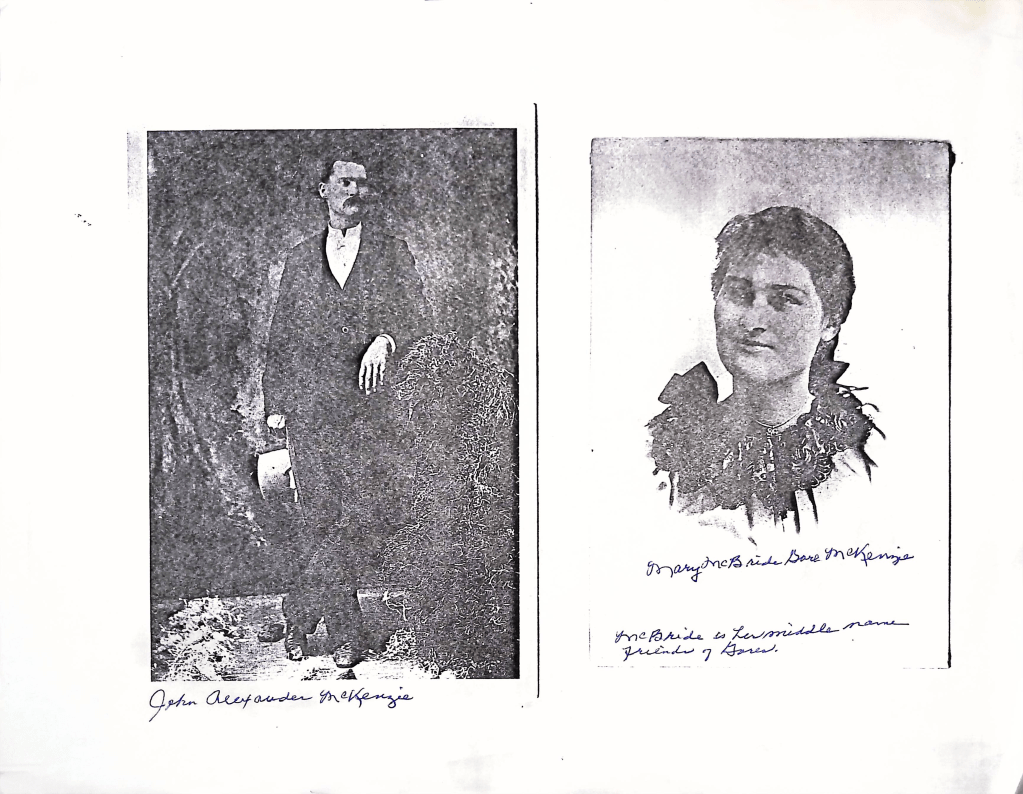
My paternal grandfather and grandmother. John Alexander McKenzie and Mary McBride Gore McKenzie

Sarah Sallie Bluejacket – my great-grandmother
Chief Charles Bluejacket – the last hereditary chief of the Shawnee. my great-great grandfather and father to Sarah Sallie Bluejacket. He was the son of George Bluejacket, who was the son of Chief Waweyapiersenwaw Bluejacket. The last paramount war chief of the Shawnee.

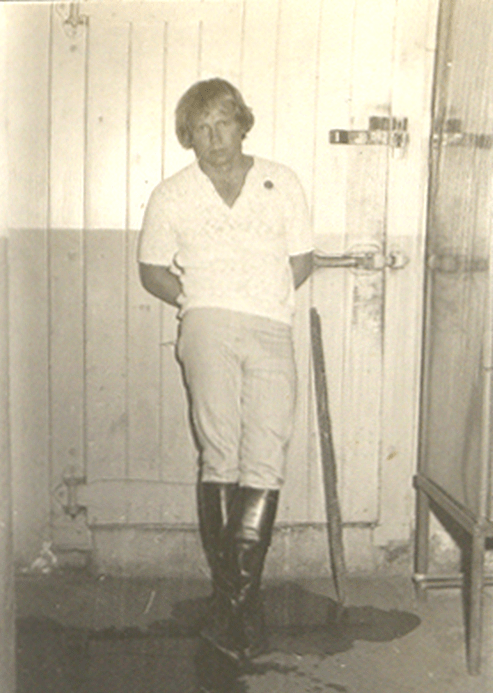
My father, Lacey Little McKenzie was born on the Bluejacket reservation in Bluejacket, Craig Country OK and is buried in the Bluejacket cemetery along with other members of our family.

Personal

Here I focus on my journey. My early years. The quest to discover my roots. The challenges I encountered and the successes I’ve had. Even, perhaps, the failures.

It’s biographical and hardly unbiased. It’s the story as I want it told.

Happy first birthday!

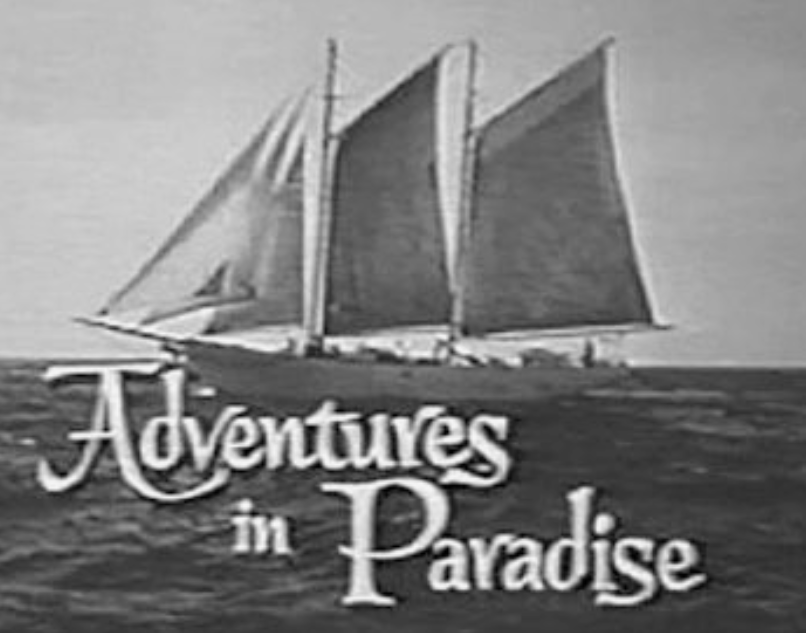
ADVENTURES

The adventures have been many and varied. From a kidnap in Oaxaca and barely avoiding being murdered in El Salvador to shooting a film on New Zealand’s Milford Track and crossing the Irish Sea in a monstrous storm. From deliberately crashing a runaway water truck to riding my dirtbike through a Kona Storm on Maui while avoiding falling trees and sheets of corrugated roofing iron. Being part of shipwreck rescue to seeing a man shot to death in Baja Mexico. It isn’t always paradise but it’s all part of the adventure called life.

People – Famous and Not

Most of my life has involved people other than my family. People who have made a lasting impression on my life by contributing to it in some way … or many ways. Some are famous. Most of them are not. But they’re all part of the story.

Sonny & Cher and me one night at The Whisky on the Sunset Strip in 1965.

Paranormal

Sometimes experiences feel right but don’t fit into the normal pattern. There are various terms for these experiences: supernatural, occult, psychic, mystical, even miraculous. Some would call them weird. From my perspective these special and unusual experiences are spiritual gifts and some can definitely be weird.

My friend John Kiewit took this double exposure on the front deck of his apartment in the Malibu Colony in 1973.