The Bombing of the Rainbow Warrior

Introduction

Shortly before midnight on the 10th of July 1985 two bombs attached to the Greenpeace vessel Rainbow Warrior earlier by French agents exploded, tearing a large hole in the ship’s hull as it sat tied to a wharf in Auckland Harbour.

What follows is an account of how I was involved in covering the evolving story from early the next morning through the trial and sentencing of the only two French agents that were apprehended.

The Bombing – Part I

Wednesday 11 July 1985.

I’ve been told that luck has nothing to do with it and that it’s the timing that matters. Let’s just say it was luck and intuition that led me through that day 40 years ago when the bedside phone rang just before four in the morning.

The voice on the other end was wide awake when the asked if the call had woken me up. When I answered yes it replied “Good … because we want you wide awake for this.” His name escapes me after all of these years, but I knew that he was in the engine room of the news studio at NBC in New York City. Despite the studio having clocks showing the time in every time zone around the world he asked “By the way, what time is there?” – probably just to test if I was really awake.

He went on to tell me that they’d received reports that the Greenpeace vessel ‘Rainbow Warrior’ had been bombed in Auckland Harbour and had sunk. “We need the details and the story.”

What he didn’t know and I wasn’t about to tell him is that my bedside phone was in the home I shared with my wife on Waiheke Island’s Onetangi Beach and that Auckland was at least an hour away by ferry. On previous occasions I’d been able to fly over in far less time in a ‘Seabee Air’ Grumman Goose or Widgeon but their office wouldn’t open in time. While I left Anne to go back to sleep I wrapped myself in my robe and shuffled off to the kitchen to boil the kettle and make of cup of what I call my caffeine kickstart. I turned on the trusty little transistor radio I’d use to listen to the news in the mornings. What little information the local Auckland stations had was very sketchy, but one report said the Rainbow Warrior was docked across the street from the Seafarer’s Mission on Quay Street.

Before moving to the island we’d lived in Inner City Auckland and worked in the CBD close to the waterfront. I knew the waterfront even better since commuting daily to the ferry wharf just up from the wharf where the Rainbow Warrior had been docked. My brain was racing through my memory map of the area when it suddenly stopped on the old building that housed the Seafarer’s Hostel across from the Marsden Wharf where the Rainbow Warrior was laying.

With a second mug of coffee in my hand I leafed through the phonebook, found the number for the hostel in the book and dialed. Whether it was luck or timing the man who answered it was a merchant marine staying at the hostel and been awakened by the bomb. And had a view of the ship. He provided me with the timing and told me that contrary to the original reports how the vessel had been sunk it was was now laying partially out of the water next to the wharf. Actually, the timing was extremely lucky because when I called back a few minutes later to ask another question I was informed that the police had just ordered a media blackout.

After that I called the police headquarters, asked to speak to their media liaison officer and introduced myself. She suggested I call back later because they had no information to release at that point. However she’d taken my name down for a media conference later that morning.

Next I called Seabee Air to see if I could arrange for a helicopter to take me to Mechanics Bay in Auckland (very close to the scene) but nobody answered. So I quickly dressed, kissed Anne goodbye, and took the early ferry over to Auckland, watching the sun rise as we approached the Auckland CBD waterfront.

My ride to town that morning was the Iris Moana, a former NZ Navy Fairmile B motor launch that had been converted for use as a ferry. It was known to locals as the “worker’s ferry” because it left early enough for passengers to get into town and connect with other transportation at 7am. Once we got into the inner harbour our skipper decided to ignore orders to avoid the area and steered the ferry to pass Marsden Wharf at a respectful speed so we passengers could see it. Only the stern and part of the cabin were above water while it sat tilted towards the wharf on its starboard side. It was a sad and sobering sight, like seeing the carcass of once proud whale beached and abandoned.

Shortly after we arrived at the Waiheke Ferry terminal the part of harbour we’d just passed was also declared a no-go zone by police. I was aware that I was just a tiny step ahead of the police lock-downs and that I needed to speed up my act.

After stopping for a quick breakfast I made my way over to Albert Street and up to my office. When I was asked to become New Zealand’s correspondent for NBC News I was working at a local radio station as the senior copywriter. My first love has always been radio and I spent my senior year at Santa Monica High School completing a two semester broadcasting course in conjunction with KCRW-FM at Santa Monica City College. The course covered every aspect of radio broadcasting from announcing, voice acting, writing, news reporting, producing and working the control “board.” Our teacher was a former news reporter for CBS radio so the news reporting segment was particularly intense with a major emphasis on ethics. Combined with a typing course in Junior High these skills have served me throughout my life and at “Radio i” in Auckland I was writing, producing and sometimes voicing radio commercials and station promos.

The initial invitation came in the form of a telephone call at work from an old friend who had been an award winning talk radio host in San Francisco and Los Angeles when I first met him and whose career had led him to senior positions in Washington DC and New York City. I was concerned that I had so little training and practical experience, but he told me I was a natural and reminded me that he’d offered me a job as a news reporter when he was station manager of a major NBC affiliate in California. When I asked if there was anything I should know he explained that NBC had never had a correspondent in NZ before but because of the newly elected Labour government’s anti-nuclear policies and the threat it posed to the ANZUS agreement it was felt that there could be some newsworthy events in the making.

I agreed to accept the invitation and he told me I’d be contacted by the head of radio news in due course.

While my conversation with Peter had been a ranged between business and old friends catching up my next call was all business and a week or so later l received my letter of confirmation and my first ID card. Peter also faxed me a list of notes on the various forms of news reports they’d want and hints on how to make them more interesting. My phone at work had already been set up to play tapes for advertiser approval but I had to rewire my home phone so my tape recorder could play prerecorded reports or interviews. I bought a new portable Sony T-Bar cassette recorder and some new Steno pads for what I called my Junior Reporter’s Kit.


Next step was to apply for accreditation to the NZ parliamentary press gallery from the speaker’s office. One step at a time. However it surprised me that unlike the Los Angeles where press passes issued by the police, in NZ I had to join the journalist’s union. Then union membership was compulsory back then.

My office was on the floor occupied by James-Kirk Advertising on Albert Street, next door to the Auckland Regional Council building on the corner. I’d been hired as creative director upon resigning from “Radio i”after we’d moved from inner city Auckland to Waiheke Island. Again, my timing was fortunate because the station was about to go through a major management shake up and I’d probably have lost my job anyway when someone I found repugnant and didn’t like me either became the new station manager.

The Press Conference

When I arrived at police HQ the room chosen for the conference was nearly packed. While I recognized a few faces from television and the radio station’s old news team I didn’t know anyone else and chose to stand at the very rear of the room.

For a brief time I’d been a stringer for TIME Magazine in Los Angeles and my one and only story had involved having to deal with the police in a very confrontational situation. Even so I wasn’t prepared for how formal and, in a way, old fashioned the NZ police conducted themselves in a media conference.

It was like they were lecturing to a roomful of students who had to be tolerated. Answers to legitimate questions were treated with condescension, guarded vagueness and a feeling that bordered on distrust.

In answer to a question at one point the police spokesman answered that they couldn’t (or wouldn’t) call this an isolated event and that there could be other bombs. I got up and announced in my best radio voice, “Bob Feigel, NBC News.” The three officers at the front looked surprised and so did everyone else as the entire room turned around to look at me. I think I had their attention.

My question was simple. If there could be additional bombs, what were the police doing to check out all of the other wharves and marinas around Auckland. The room was silent and so were the police. All of a sudden they went into a huddle off to the side and looked in my direction. Finally, the lead spokesman answered that they couldn’t divulge what the police were doing at this time and that the conference was now over.

There were a lot of murmurings, shaking of heads and puzzled looks in my direction as the conference broke up and as I was leaving one of the policemen asked me to stay behind. He introduced himself as Inspector Sergeant Graham Bell (later Detective Inspector and host of New Zealand’s long running Ten-7 weekly crime watch show). He asked to see my credentials. Once that formality was taken care of and I explained that I was based in NZ (people kept assuming that I’d somehow been able to get there from the USA in a few hours on a magic carpet) we had a friendly chat during which he told me that the question I’d asked was awkward because (off the record) they hadn’t yet considered checking for other bombs. He thanked me and assured me that it was now a priority and they’d been caught off-guard by the question. Graham and I shook hands and he said he was sure we’d been seeing each other again. And he was right.

The Invisible Man

(To be continued)

The Bombing of The Rainbow Warrior© Robert R. Feigel 2022 – All Rights Reserved

My LSD crash and burn … and the ‘poems’

My introduction to LSD was pivotal. I was living on Topanga Beach in a beach house that had a of revolving cast of housemates. One of those was a guy named Larry – aka Lifeguard Larry. Somehow I always got the room with the built-in bunk beds and my housemates always got the rooms they could customize. But my favorite room was the beach in front so it never occurred to me to move into the vacated bedroom.

Another on-again, off-again house-mate was George and at that stage of his varied career he was working as a graduate student at the UCLA School of Medicine where he was somehow able to acquire endless things of interest and value.

Those things included microscopes, cameras, scales for weighing drugs and the drugs themselves.

One day George arrived at the house with a what could be described as an attaché case except it was made of wood and about half the size of an attaché case. He summoned the three of us in the house at the time into Larry’s bedroom.

He opened it carefully to reveal rows of ampules full of a beautiful blue liquid cushioned in some sort of foam material. The wooden case was stamped with the words: SANDOZ LABORATORIES.

Like just about everyone I knew back then I smoked marijuana and had been since my teens. The same for amphetamines, which we all used for meeting deadlines in college and for weekend partying. So I was not concerned about trying something new that seemed quite interesting.

It’s hard to describe exactly what I experienced with that first dose of pure, unadulterated and legal LSD. I’d been told by George that it was supposed to be a deeply spiritual experience and the other three seemed very serious about the whole thing. But much to their disgust it made me laugh. Not hysterically, but so incessantly that they finally made me go to my bedroom so I could continue to laugh without bothering them so much.

Fast-forward several years and I was managing a surfboard shop in Woodland Hills, interviewing people like Sonny and Cher and The Byrd’s on the Sunset Strip and publishing the interviews in magazines like the KRLA BEAT.

Although Sonny and Cher eschewed drug use it was as normal in the Hollywood scene as bell-bottom trousers and beads.

Long/short my last interview was never published. It was at The Trip with Arthur Lee and LOVE, the group he fronted. The interview went well and Arthur invited me to join him and the group to cruise around the parties after the gig.

I enjoyed their final set and left with them in a long, black limousine with tinted windows, sitting in the back passing never ending joints around the smoke filled space and laughing at nothing in particular and everything in general.

We went to several parties where we stayed for a short time, smoked more joints and carried on to the next. Then came the party where I crashed and burned.

I’d heard about punch being laced with LSD at parties but never thought about it as I drank the delicious punch at this party. Besides, all the pot had left me hungry and thirsty. So I drank a lot.

It was the party sounds that gave me the first indication that I was becoming very, very stoned. It became a cacophony of noise that was not pleasant. So I sat down on a sofa and waited for my head to find itself.

I looked down to orient my vision with the floor … and watched the floor melt. Then it became the most beautiful swirls of changing colors and became infinitely deep. That was truly wonderful.

At some stage I became aware of the person sitting next to me. I looked and saw an amazingly beautiful young man with the most penetrating eyes I’d ever seen. He smiled and for the first time during a “trip” I was terrified. His eyes were completely dead and I came down with a bang.

I left the sofa as quickly as I could and as I headed for the door Arthur stopped me and said, “I see you meet our resident hitman.” I must have hesitated or mumbled and Arthur said, “You know … hitman … he kills people for money. He’s very rich.”

I made it to the street and it was raining lightly. Like most Southern Californians I’m not used to rain and joke that I’d melt. But I also dislike walking around in sodden clothes with wet hair and fogged up glasses. It was like my cozy little world had just had a bucket of water thrown over it and I thought why not add to it by crying.

Arthur found me sobbing, standing on the sidewalk near the limo and told the driver to take me back to where my car was parked near The Trip. “Go home, sleep it off. You’ll be fine.”

But I wasn’t fine. I was shaken to my core. I couldn’t function. I couldn’t blame it on anyone else or anything I’d experienced. I just felt empty, hollow and hopeless. And the following day it was only worse.

I’d seen an article in the LA Times about people who’d had “bad trips” on LSD and decided I must be one of them. The article mentioned Dr Sidney Cohen, a psychiatrist at UCLA who was focusing on the effects of LSD. I phoned his office and he agreed to see me. I was sure I was insane and wanted to go somewhere that wasn’t here. I was slipping down into a deep, dark hole that had no bottom.

After a long and intense consultation he told me that I was not insane or even close. But that it was his opinion I needed to remove myself from what he called “the drug culture” and the “availability of drugs.” He asked if there was anyone in my family who could help me to do this.

I told him that I’d spent three semesters at Evansville College in Southern Indiana. Both my mother and father had graduated from the college. I explained that I’d been born in Evansville but only visited my father in summers since my mother and he had been divorced and separated since shortly after my first birthday. I also told him that I’d returned to California the week before completing my third semester because I had been homesick and hated being away from the beach.

He offered to phone my father and explain the situation and his recommendation that I leave the lifestyle that I had embraced. My father agreed on the condition that I’d live in their home, re-enroll in Evansville College and put myself in the care of a psychiatrist of his choosing. Dr Cohen told him I didn’t need psychiatric help but my father, who thought that anything to do with drugs was a sure sign of insanity, insisted.

A few days later I was on a flight back to Evansville in the winter and while I was now removed from the drug culture of Hollywood I was about to be introduced to the emerging drug culture of Evansville by the four college students I met in the waiting room of our psychiatrist in Evansville as a new chapter of my puzzling life unfolded. We became close friends and dumped the psychiatrist.

The following attempts at poetry are one of the results of a mind in turmoil:

Check Your Baggage But Not Yourself

Bulbous Bob arrived today

in wintry Evansville,

My air plane flight was out of sight

because I took a pill,

The pill went down

and I went up

the plane was secondary,

The pill was mine

the trip was fine

the seat belt necessary,

What did I see

what could it be

in that hallucination,

Or was it then

I saw a hen

her egg in incubation,

Or was it there

I saw a bear

her cub in hibernation,

I saw in jade

this vision fade

and reappear in fear,

And saw instead

a vision red

I felt the end was near,

I saw a Buddha

sitting high

upon a ticking clock,

I saw a narc

kicked off the ark

stand crying at the dock,

I saw a rocket

in his pocket

takeoff like a shot,

A Texas ranch

an olive branch

the weapons he had bought,

I saw God’s Son

in Washington

His mission was to teach,

The President

and congressmen

to practice what they preach,

I saw a bird

release a turd

upon a sleeping man,

I saw a guy

in suit and tie

his sign said “Bomb the Ban”,

I saw a cat

devour a rat

in mild annihilation,

I saw a dog

piss on a log

and end civilization,

I tried to hide

the fear inside

I felt as I was landing,

And tried instead

to fill my head

with love and understanding,

Was it a dream

that I did scheme

while flying in that plane,

Or was it that

from where I sat

the World looked quite insane?

Could Be

All American,

read the label

Halloween,

in mink and sable

Come as you are,

once a year.

Sometimes

The funny fumes bend fancy scenes

around my finger pointing, waiting,

while music blends with movements known

before the dance of dreams.

Something

The magic it fades quickly now

there’s nothing left to see,

Time’s quickening smile

follows my thoughts

glances my way,

My half light flickers

against its light

thinking of thoughts to think,

The store rooms tremble,

Dust flits,

Nothing.

Take a Look

Glancing finally

on that piece of foil snatching light

from quick dancing near,

Resting finally

on word pictures played against

the roof lids of Martian canals moving,

Stopping quickly

at the marble, mired pedestals

of escaping memories

and filtering time,

And again.

The Night World

In apparent apathy

to its own mystery,

The night world stiffens

and shudders and shrieks,

It has no place to go

even though

it moves with day,

And then again

it may not wish to see

the other side of night.

Can You?

I caught me looking at myself

to see what I could see,

I caught me looking at myself

and saw myself in me,

I caught me looking at myself

and saw where I was at,

I caught me looking at myself

can you imagine that?

Perhaps

Perhaps it’s best I come here now

while reason still has wings

that flit against the self

as many times a time flick

as you might imagine, expect or allow.

Gnash times five,

It’s time to switch polarity,

Madison Avenue family,

Sit pretty,

Self pity,

Charge the coffin,

The television set is never too far,

Mixed drinks perplexing,

Dispose of the mint leaf

(Fig leaf?)

neatly,

The leash only loosens

a little.

Wind the clock

eat

sleep

small truths snuggle.

Mary Jane

My Mary Jane upon a reef

her golden hair turned softly there

about her bare white breasts.

My ego nods these brief refrains

of rhythm sucked my id contains

my head instead, remains and rests.

Heavy Winter

As winter fades in cold dull shades

of blue white crystal chalk,

Powdered, penetrating,

A dirge,

Swaying against real

in damned harmonious hypocrisy

of the two extremes

and where the meet.

A Buzz

Twinkling, tiny, tumbling glances

sneak beneath sand paper lids

and stop in front of filmy, floating eyes

water slick and warm and liquid,

And views from behind

the silly string of things happening,

Like they should happen that way,

Almost as if we have no control,

Almost,

Really.

Just Being Silly

Night turns into day

day turns into night,

White turns into black

black turns into white,

Somewhere in-between

colors can be seen.

Chief Sitting Stoned

Sitting here so stoned

I cannot feel my head

my nose keeps falling down

my ears are flipping flapping,

Words come so very hard

mind bending likened pretzels,

In careless wanting

crazy carefuls,

Time’s best friend

looks hard to stop,

Mary’s gotta big mouth,

Time to call it stop.

When I Couldn’t Care Less

It could rain me down with heavy objects

Yet I couldn’t care less —

now,

I’m blasted from orbit

into a groove bag of great amusement,

I laugh at myself

and what I write,

Or think I do,

And begin

always begin,

To wander my way back.

Know thyself

As idols silent in the dark

of temples buried ten gods past,

Philosophers know all of life

yet leave themselves be buried last.

A thinker’s mind that atrophies

as sacrifice to heaven’s pelf,

The mind of man creates a god

and man destroys himself.

The waiting game …

PART I

When I decided to leave my new role as editor of Young American Report and head for Maui I really didn’t think out my escape plan. I had some money saved and was able to ship my Kawasaki 125 over so I’d have some “wheels” for exploring my new adventure, but I hadn’t thought things out beyond that. And I didn’t consider what I’d do if I decided to stay.

Once it became clear that the house and use of a car I’d been promised wasn’t going to happen I had to make some decisions. My friends Toni and Rick Segoine had put me up as their guest for a week or so, but that was going to be short term.

After staying one night at the Pioneer Inn on the waterfront I realized that my money wouldn’t last long if I stayed there any longer. Then I was able to get a room near the waterfront in the Lahaina Luna Hotel on Lahainaluna Street. Known locally as the Lahaina Looney it was a rundown building with small, cockroach infested rooms. Mine was over the bar. On the sign outside was a poster for the current band whose name is as forgettable as the music they churned out. But what caught my eye were the words, “As seen on the Pat Boone television show.” Hardly a recommendation as far as I was concerned.

By paying for a week in advance I was getting two nights free. I was also sentencing myself to a week of misery. My bed was right over the drummer whose nightly solos meant that sleep was totally out of the question. The room was also hot and humid with only two windows above the street off a rickety veranda that sagged. The place smelled of damp, stale beers and tabaco.

To give you an idea of how clean the place was, one night I returned to the room only to see the carpet disappear. Yes … I’d had a few beers and it took me a moment to realize that there’d never been a carpet. Only a small stained thread bare rug on a warped wooden floor. What I’d seen was the cockroaches scurrying back under the skirting boards along the walls.

Next day I went to a hardware store in Lahaina’s little shopping center and bought myself a small desk fan at a price that staggered me. Everything was more expensive on Maui than the mainland. And though I shouldn’t have been surprised I was and realized my cash reserves wouldn’t last long at this rate.

I put the desk fan next to my bed head on the room’s only chair so I could at least get some air directed towards my head during the night while I covered the rest of me in the sheet because the place was also infested by swarms of mosquitoes. Then I’d wrap the measly little pillow around my neck and ears in an attempt to drown out the raucous music from the bar.

Unfortunately, the fan tended to vibrate and “walk” itself off the chair and when I’d finally fall asleep I’d let go of the pillow and I was back to square one.

After a week of this I learned that the band was leaving at the end of my first week so I signed on for another week, only to see a banner put over the other poster announcing “Back by popular demand.”

I bought a car for $100 at a local gas station that several people recommended. The proprietor told me it had just been sold to him by some departing surfers from South Bay and mentioned the name of a well known surfer as the former owner. Well … it must be a good car then.

After handing over the money I drove it out onto the street where steam started to spill out from under the hood and the car stopped. It had blown the head gasket. The proprietor laughed, apologized and offered to fix it for the cost of a new gasket. It cost me a couple of dollars and after waiting in a nearby park under the Banyan tree. I was able to drive away in my new hotel room.

For the next few weeks I enjoyed a new location every day and night. The car allowed me to explore the island and I’d either sleep in the car or nearby. The lava flows near Honolua Bay were particularly attractive and sometimes I’d venture out and sleep in one of the exposed bubbles that had burst. Like sleeping in a secret cave. Only the cave entrance was open to the stars and the sound of the surf.

One night while sleeping along a narrow strip that ran between the Honoapiilani highway and the mangroves north of Olowalu I spotted a huge cane spider crawling up the front seat next to me. Forget that! I decided to sleep outside on some dry sand near the mangroves. I had a flash light and it didn’t take long for me to hear clicking sounds and discover that I was surrounded by crabs.

It wasn’t my night because a passing police car saw my light and stopped to investigate just as I was preparing to sleep next to my car on the side of the road. I wasn’t arrested but I was told that a description of my car and the license plate had been passed on so I would be charged if found camping out again.

Time was running out and so was my money. Then my friends, Toni and Rick told me that their old place in Kihei was vacant and I could rent that. I think the rent was $25 a month. Now that I had a base they told me the Hilton in Ka’anapali was hiring waiters. But I had no experience. Not a problem, neither had most of the surfers who were already working there as waiters. “Just tell them you have experience and you’ll pick it up.”

The day came for my interview I dressed in my mainland best and met the man I’d later know as Captain Kurt. He was an older, urbane man with an accent I later found was Swiss-German. The interview took place at a comfortable booth where he was nursing a cup of coffee poured from a silver coffee pot. His first question was totally unsuspected.

“Have you eaten yet?” It was mid-morning and I’d rushed across from Kihei to Ka’anapali without even thinking of food. When I told him I hadn’t he handed me a menu and invited me to order.

WOW! What a choice. I took a stab and asked him what he’d recommend. He smiled and ordered me something I can’t remember. But it light so I could eat while being interviewed. For himself he ordered “the usual.”

A bowl of prunes and a bowl of All-Bran turned out to be “the usual.”

He asked me what kind of experience I had as a waiter and while I tried to bluster my way through I finally looked him in the eye and told him that other than dining in fine restaurants with my parents I had absolutely no waiting experince.

He smiled and said, “Fine. I think you’ll make a very good busboy. Report here tomorrow morning and you’ll get your uniform. Do you have a clean pair of white sand shoes? No? Well go into Lahaina to this store and buy a pair and some white socks because that’s the only part of the uniform we don’t provide.”

Next morning I arrived bright and early in my new sand shoes and was turned over to someone from housecleaning who gave me a choice of white pants and red aloha shirts to try on. Once I found ones she approved of I was told I’d was expected to exchange them for a new uniform whenever they got dirty. She showed me where to leave the dirty uniforms and had had a record of the sizes I needed for their replacement.

Thus dressed I returned to the dining room to report to Captain Kurt and he said, “And now we start the training. You’ll be the busboy for my table until I think you’re ready to be unleased on the world at large.”

Captain Kurt was the maître d’ hotel. He ran “front of house.” Someone else managed the bar and the chef was in charge of the food. The somalier was in charge of the wine and the head waiter was the maître d’s second in command.

“Please bring me my usual breakfast … 7 prunes and a bowl of cereal.”

For the next week or so I brought him his breakfast each morning for six days a week. Every morning he’d look at me, smile and then carefully count the prunes in front of me. “One, two, three, four, five, six …” and he’d pause “… seven. I think you will make a very good busboy.”

I was also trained as a busboy by the head waiter and other waiters. I was told the importance of keeping a roving eye on ALL of the front of house, not just my station. My station would be for the tables covered by several waiters and waitresses. But it has a large dining room with a lot of tables full of a lot of guests wanting a good breakfast before heading out for whatever adventure or site they were visiting that day.

My job was to make sure their water jug was always full and ask anyone with a glass that was getting low if they’d like a refill. I was to scan each table to see if their ashtray needed replacing (yes … people smoked back in the days before the smoke-nazis). If appropriate I was to help seat the ladies and rush over to retrieve any dropped cutlery or napkins and replace them. Basically, I was to do everything the wait staff didn’t.

Most important was to never take my eyes off the dining room and to keep checking if anything … make that ANYTHING … needed doing.

Under no circumstances should I stand off to the side talking to my fellow workers and ignoring the guests. Something that it seems isn’t taught in today’s casual restaurants.

Every morning Captain Kurt would count his prunes and give me a friendly nod that was my cue to carry on. That routine started to seem strange so one day I decided to ask the kitchen to put an extra prune in Captain Kurt’s bowl. As usual he counted his prunes and when he got to “Eight … ah yes …. now I think you will make a very good waiter.”

For the next couple of weeks I worked as a breakfast and lunch waiter which was a problem on two levels. One, I had to work a split shift and somehow occupy myself in Lahaina because it wasn’t practical to go back and forth to Kihei for the short time between shifts. nor was it enough time to catch a few waves.

The other problem was that breakfast and lunch tips were either non-existent or paltry. The real tip money was for the dinner crew. But after working breakfast/lunch for a couple of weeks Captain Kurt put me on dinners and the whole atmosphere changed. This was the big time.

The Lokilani Dining Room was “silver service.” It demanded a far higher standard of service than breakfast/lunch. The tables had to be set with more cutlery, more glasses and with more precision. The head waiter was Paul Kirk. He was a true pro, not a surfer or student for whom being a waiter was just a way to make a living while spending the day surfing or going to school. He was the real deal and very generous with his time and knowledge.

I took to waiting like it was second nature. I loved it. To me it was like being an actor on the same stage with a different cast of characters every night. The guests could be up, down, friendly, rude, shy, over-friendly, provocative, funny, sad – even flirtatious.

He also emphasized what I’d been taught as a busboy. “Never take your eyes off the front of house. Observe observe observe. Know what’s going on everywhere, not just at your station. If you see one of the other waiters or waitresses getting overwhelmed then step in and help them. This is a team effort and we’re in it together.”

Guests were rarely there for more than a few day. So I decided to use various accents and personas on a changing basis to keep me fresh. Never anything extreme, but somewhat entertaining. Two lovely ladies from Montreal invited me up to their rooms after my “French” accent caused them to laugh and offered to teach me how to be more authentic. Or at least that’s what I thought they were offering to teach me.

After explaining that I’d be fired if I was caught one of them gave me her calling card and invited me to be a guest in their family hotel in Montreal.

Front of house and the kitchen were two separate and different worlds. Captain Kirk ruled the calm and efficiency of the dining room while a mad Frenchman named Chef Robert (silent t) ruled the kitchen. He had a nasty temper and it was never far from exploding. One night he chased a Filipino dishwasher around the kitchen with a carving knife until the dishwasher finally stopped and confronted the chef with a switchblade.

One of my fellow waiters was someone we all had to keep an eye on because he’d steal your order if it was one he was waiting for on one of this tables. And drugs made some inroads that affected service. One evening a friend who lived nearby in Kihei was still reeling from his wife leaving him to return to the mainland with their daughter. He’d been drinking and drugging a lot since then and that night he arrived in a dirty uniform with a couple days growth of beard looking disheveled and dunk. Captain Kurt wasn’t there that night and Paul Kirk was otherwise occupied on the other side of the large dining room when my friend Paul arrived late.

The crew were trying to keep Paul Kirk’s attention off of the other Paul, hoping he’d sober up and get into a clean uniform. In the meantime. I was serving meals at my station when Paul got into an altercation with a blousey woman with huge hair. She ordered more ice for her water glass and Paul had reached into the water jug he was carrying, grabbed a few ice cubes and plonked them in her glass spilling water on the table cloth.

She loudly demanded to speak to the manager and as Paul Kirk hurried over Paul turned his back to face the next table and managed to empty the entire jug of water over the woman’s head. She screamed of course and while one of the waitresses was assigned to accompany the woman and her husband from the table Paul Kirk led other Paul back to the kitchen. Laughing all the way.

The shock around the dining room was palpable but all of us front of house people wiped the smiles off our faces and tended to our tables whether they needed it or not. Things quickly calmed down and back to normal and Paul was fired.

One of the most amazing nights I had was when I was assigned to work with a hand-picked team of waiters and waitresses to work in the conference marque that adjoined the dinning room. From memory, the restaurant sat around 500 people, the small private dining room around 40 and the conference marque around 250.

We were briefed by Captain Kurt about a very special and important event that would require the service not only to be of the highest standard but “discrete.” We were to be observant as usual, but we had to station ourselves around the periphery of the seating area for the guests and not engage any of them in conversation. All communication was to be limited to answering questions.

It was a set menu and everything from drinks to desert had been arranged for earlier. Paul Kirk would alert us when we were to serve each course and we’d been taken through the seating arrangements and how we were to serve each course.

To ensure nobody could reveal any information that may have caused media attention we weren’t told anything more about the event until the night and after it had started.

The event was arranged for and paid for by the multi-millionaire Hawai’ian entrepreneur businessman and philanthropist, Chinn Ho for his extended family. It was like the annual general meeting of the shareholders of a corporation. The term used was “Hui,” which is the same Maori term for tribal meetings in Aotearoa New Zealand.

The Hui was to give Chin Ho’s extended family a reckoning of that year’s profits and loses and to hand out dividends and bonuses to those who earned them. One of the main reasons for the secrecy is that the payments were made in gold.

The dinner went well albeit noisily. In fact, the noise level as a big surprise and the only difficult thing we had to contend with. Our interaction with the guests was minimal and it was Paul Kirk who supervised the service of the head table where Mr Ho and his party sat. After dinner Chin Ho put aside his cigar and the entire room went silent. His address was in Chinese with a few English terms thrown in and although there were a few mummers the room remained silent.

At the end of most short statements he’d turn to one of the people to either side of him and they’d walk to one of the guests and hand them a bag. It was only later after we’d been dismissed (with a $50 dollar bill each as our tip) that we were told that each bag contained an amount of solid gold coins commensurate with the recipient’s contribution to the family business they were part of.

A few weeks later, Captain Kurt asked me to join him as before in his booth. He informed me that everyone was very pleased with my progress. He was uncharacteristically hesitant, as if trying to figure out a way to continue. He told me a bit about his background and how he’d worked his way up to the job he now held. He explained how much he liked it and the “perks” it had.

He’d grown up in Switzerland, gone to work as a teenager in a hotel kitchen and been trained in the Ecole hôtelière de Lausanne (EHL), the best accommodation school in the world. Then he asked me if I’d ever considered a career in hospitality.

That took me by surprise because I hadn’t. He told me he’d been watching my progress and so had the management of the hotel. If I was interested they would sponsor me to go to the hospitality school Hilton hotels used in Switzerland. I’d be flown over, get room and board as part of a scholarship – all paid for by the company. Anticipating my question he told me that I’d be allowed two expense paid trips home each year and guaranteed a job suitable to my skill level upon graduation.

In a way it sounded like something I’d expect at a US Navy induction center. “You’d see the world.”

I didn’t know what to say except thank you. Captain Kurt asked me to think it over and come back with any questions. “You have some time to consider it because we’d want to wait for things to quiet down here and for the new term to start in Switzerland.

After thinking it over for a week I’d decided to turn down the offer because I couldn’t imagine leaving Maui for Switzerland or anywhere else. I’d also discussed it with Paul Kirk who advised me to consider that he made a lot more money and had a lot more freedom than Captain Kurt. “Sure … he gets a nice suite and all his meals free. But he’s also on call 24/7. But that’s not the worst thing. The maître d’ doesn’t make anywhere near what I do in tips alone. Hotel and restaurant management is a bitch!”

But Captain Kurt was nowhere to be found. He’d gone. So had Chef Robert and the “comptroller.” The rumors flew around like crazy. All three had left the Hilton to work down the beach at the Sheraton. Some said the comptroller and executive chef had been fiddling the books and that Captain Kurt was caught up in the flak. Then why would the Sheraton hire them? Another theory was that they were so good as a team that the Sheraton headhunted them.

In any event, I was relieved that I wouldn’t have to tell Captain Kurt I would be turning down the offer. But I wasn’t out of the woods just yet. The hotel manager summoned to his office and told me that the offer still stood and asked if I’d come to a decision.

Once I told him that, while I found the proposition attractive I wasn’t ready to commit myself to a career decision yet. His reaction was a relief. He understood completely and asked me to let him know if I changed my mind.

A few days later I was transferred from the restaurant to the ‘steak bar’ outside by the pool. Called The Whaler’s Den it was far more casual than the restaurant and only had one chef. His name was Joe and he was the master of a large open barbecue. He had to get there early to set the Kiawe wood alight so it would be flame free and at the right heat when the guests started to arrive.

The menu was small compared to the restaurant. Steaks, chops, fish, baked potatoes and a great salad bar. The place made a fortune in drinks. Instead of working inside in a large enclosed restaurant with a hot, manic kitchen I was now able to work in the open air with a large swimming pool on one side and the beach on the other.

Let me explain what working in a big restaurant is like. Front of house is quiet, organized and relatively calm (minus the occasional meltdown or dropped tray full of dishes). Walk from the front into the kitchen and you’re going from heaven to hell. Noise, chaos, frayed tempers, insults, threats and it’s not all that hygienic either. I’d never eat the food that came out of it.

The Whaler’s Den was like another world. Each meal made right there in full view of the person who ordered it. Fresh salads, fresh air. I loved it.

Good thing because it turned out to be another step towards management. After a few weeks I was made assistant manager. Not that it concerned me. The manager was a very laidback guy who made everyone’s job a pleasure. Then the next step was revealed. My manager was promoted to some other job on the management ladder and I was made “acting manager.”

Suddenly, no more tips. My salary went up, but my earnings went down. Not only that but I had to get there even before Joe. And I had to stay and “cash up” long after the place closed. It was no longer a pleasure. It was, as someone quipped, “A mug’s job.”

One late afternoon I was there with Joe when he shrugged, walked into the small galley bar, filled a bucket with water and poured it over the fire he’d just started. “Might as well close now and get these chairs and tables inside.”

“Why, what’s going on.?” Joe and I had established a good working relationship and since he was a local I’d ask for his advice on things. He pointed his arm and index finger towards Mo’lokai. “See where I’m pointing …. that little cloud over there?” Yes, I could see it, but it really was a little cloud. “Kona storm,” he said. “Be here in a half an hour. I’m going home and you should too. We won’t be opening tonight.”

By the time I got some help to clear the Whaler’s Den of anything that could blow away the storm had hit. Someone who wasn’t aware of the storm was wheeling out a tall stack of glasses out from the restaurant to the Whaler’s Den when a gust of wind blew the stack over into the swimming pool. The broken glass would take days to clear from the pool once it was drained. The chairs, loungers and tables stationed around the pool were blown all over the place, some barely missing those of us still outside.

Fighting the force of the wind I made it into the hotel and out the back into the calm area that the building had created. My little Kawasaki 125 dirt bike looked ready to roll and despite being told to stay locally until the storm was over I decided to ride back to my little place in Kihei.

Confession time. I love storms. Earthquakes energize me. The tornado I was very close to only made me uncomfortable because it made it difficult to breath. I thoroughly enjoyed the several cyclones and two hurricanes I’ve been in. I don’t know why. It is what it is.

So I took off into the growing storm on my dirtbike feeling exhilarated. The mere fact that once I got out of Lahaina the road was empty except for me didn’t phase me. Even the gust of wind that stopped my bike didn’t phase me. I just changed angle and gunned it. It wasn’t until I was nearly hit by a falling tree and had to gun my way around the next one that I started to think about turning back. But only for a second.

Once I got to North Kihei Road the going got easier. Either the storm was abating or I was out of the main thrust. Then I pulled up in front of my place and saw that the lean-to beside the kitchen had totally collapsed.

The floors were concrete so the only things soaked by water coming in the front windows were the tatami mats that could be replaced. The mattress that served as the sofa and guest bed was far enough away not to have been affected. My bedroom was fine.

No electricity of course. But that wasn’t major. It came on a few hours later. The lean-to had a few abandoned items in it. A couple of old kerosene stoves. An old table and a few broken chairs. Nothing of value or use. It just made my place look more like a shack than it had before. No big thing. I was home.

The Waiting Game – Part I © Robert R. Feigel 2022 – All Rights Reserved

The boy under the stairs

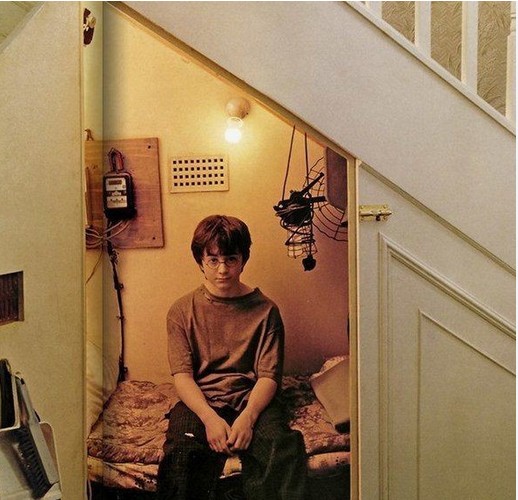
Anyone who has seen the Harry Potter films remembers Harry’s cupboard under the stairs. This small space was where Harry was forced to live by the Dursleys, the aunt and uncle he had to live with after his parents were murdered.

From Harry Potter and the Sorcerer’s Stone

Those scenes resonated with me by awakening memories of a real boy who’d been forced to live under the stairs.

In the mid-60s circumstances led me to go back to Evansville College in Southern Indiana in an attempt to complete what I’d walked away from earlier and earn a degree.

To begin with I lived with my dad, stepmom and little brother. But the time came for me to get a job and move out on my own. My stepmom was a volunteer with a mental health organization and heard that the support agency for the intellectually handicapped was looking for a driver. I got the job.

The job entailed driving a 12 passenger “shuttle van” that would deliver up to 12 passengers to a spot where they’d be taken the rest of the way on a full sized school bus. The reason for this was the difficulty the big bus would have negotiating the narrow, remote rural areas outside of suburban Evansville.

This meant an early start so I could pick up everybody and arrive at the rendezvous spot in time for the big bus to deliver everyone by the start time at the center. The younger people went to a training school and the older ones to a workshop. My youngest passenger was maybe 8 or 9 and the eldest in their late-40s.

I really enjoyed the job and got to know my passengers well during our daily journeys. We’d sing, joke and I learned a lot about the individual ways their “handicap” affected each of them. Some exhibited what I came to think of as the classic Downs Syndrome appearance. Other’s exhibited no hint of any abnormality until they started to interact with me and the others. To put it another way, each of my charges was defined by their individuality and not their supposed “handicap.”

With some I was able to have perfectly normal conversations. Others were like difficult, petulant children. And, on occasion a couple could be truculent. There was no normal or rule.

It soon became clear that I could rely on a couple of my charges to help look after the others if I had to park and leave the van momentarily to assist one of the physically handicapped passengers into the van. They’d also help those who needed it to get in or out of the van. We’d become a family or team of sorts, with each of us playing our parts.

There was one problem person of course. He was in his 40s and would sometimes get angry and abusive. With him I had to be very firm, which sometimes upset some of the more gentle and reserved people.

People. Yes … they were all people with individual, unique personalities and emotions. For me, it was a steep learning curve and a wonderful experience.

The most enlightening and immensely rewarding experience was being able to spend time with the boy from under the stairs. I was summoned to a meeting at the center administration office by my boss and found myself in a meeting with her and two of her colleagues. They wanted to brief me about a challenging new passenger and warn me that I might encounter some problems with the boy’s parents.

They told me that he was around nine or ten and that his parents had been forced by court order to send their son to the the to attend the school. The boy didn’t speak and never had. He’d been locked away in a cupboard under the stairs and kept separated from the rest of his family. The neighbors had never seen him outside and the authorities weren’t even sure of his exact age.

According to the brief his parents were fundamentalist Christians belonging to some sect I’d never heard of and that they thought the boy and his condition were caused by them having committed the sin of having consumed alcohol when he’d been conceived. His condition was the punishment for their sin and the sin was something they wanted to hide from their sect community. How the authorities discovered all this and rescued the boy was not something that could be revealed.

I was to drive up as close to the boy’s home as close and as discretely as possible I was to go to the front door, knock once and wait for the boy to come out. I was, under no circumstances, speak to anyone who came out with the boy. Or look at them.

That first day I was apprehensive, especially after I arrived at the house and saw it. It was like something out of an old movie. An old, two story wooden house that might have been a farm house surrounded by fields in the past. It was still in a rural area with no houses nearby, but the property was bleak, unkept with no grass and the house was dilapidated and in need of paint, maintenance and repairs. The stairs creaked as I walked up onto the front porch and knocked once on the door.

After several moments the door opened and a woman pushed a boy out onto the deck and swiftly closed the door.

The boy was dressed in what looked like hand-me-downs. Without looking at me he glanced around briefly before looking down at his feet.

Feeling at a bit of a loss I lamely introduced myself and told him we were going to go to the van. At that he looked at the van and put his hand in mine. His hand was cold.

We walked to the van and instead of sliding open the side-door and seating him inside with the others I opened the front passenger door and buckled him into the seat across from me. Then I introduced him to the regulars and they all chimed in with hellos while he continued to look down at his feet. As we pulled away he looked up at the house and I saw a curtain fall back in place. As if the regulars sensed the awkwardness the rest of the journey was made in silence.

His name was Daniel and except for the front door opening and closing with only Daniel coming out the next couple of days were a replay of the first on Wednesday. So on the following Monday I decided to change the routine. I restarted the banter the regulars and I had previously enjoyed and got laughter and singing back on track. Somewhere along the line I’d learned that children don’t like to be talked down to and appreciated being talked by adults as adults. I included Daniel in the conversations and would ask him questions even though I’d been told he’d never uttered a word before.

Somehow, I’d gotten the impression that he understood what all of us were saying and it was confirmed and encouraged when he finally nodded with an affirmation after a question.

The breakthrough came unexpectedly. One day a later pick-up was tardy and I honked the horn outside their home. Daniel’s head jerked up and over to me and then to the steering wheel. This led to me saying, “horn” and pointing at it. For the first time he smiled and I tapped the horn and repeated the word several times. I could tell he was trying to speak but was having a hard time figuring out how. After several tries and obvious frustration he managed to form something that sounded close to horn but wasn’t quite it.

I only had the morning run so my time with my passengers was limited. As Daniel was one of my middle pick-ups before meeting the main bus my time with him was even more limited. But we concentrated on “horn” for a few more days until we were both satisfied. He had said his first word.

From then on his learning speed increased until he could name and pronounce every part of the van’s dashboard, including wipers … which was a major triumph. We exchanged names and so did most of the other passengers. He was slowly but very surely learning how to talk.

After a few weeks of this I was once again summoned by the boss lady, only this time there were several colleagues and someone who was introduced as the director. I was closely questioned about my interaction with Daniel and had to describe everything in detail. I had to wonder if I’d done something wrong. WHEW! At the end I was told that they had been led to believe that Daniel was mentally impaired due to brain damage and would never progress beyond grunts at best. They were amazed and delighted at his progress and could see him one day living a “normal, productive life.”

I was relieved, but unprepared for what happened next. After lots of questions about my life, my aspirations and my plans for the future they told me that they thought that I had demonstrated an unusual aptitude for working with the intellectually handicapped (a term used then but thankfully used less now) and that, with the proper qualifications, I could benefit their area of health care and have a brilliant future in that sector. They offered to sponsor my continued education at a university that offered that kind of program. They’d also guarantee me a job working with the the organization during that period and upon my graduation.

So far so good. Then it all came crashing down. Moving on, I was to be assigned to a new route and wouldn’t have any further contact with Daniel and my regulars from here on out. I’d formed too close of a relationship with Daniel and the other regulars and they to me and that wasn’t considered to be beneficial or acceptable. They knew I’d understand.

I understood perfectly and after saying goodbye to Daniel and the regulars the next morning I dropped off the van keys and quit. They were shocked and contrite but despite the attraction of their offer and the enjoyment I’d had and could have continued to have I knew I wasn’t cut out for that kind of organizational control.

Working in the health care sector requires a deep and very personal commitment that can’t be taught or bought, and should never be undervalued. Yet there seems to be a fundamental fear of any relationships between carer and cared for being anything but remote and impersonal. To me that ignores a very important part of the process. It also demonstrates a lack of trust.

Sure, it’s wrong for a carer to take advantage of their “client” or “patient,” but I know of one remarkable hospice nurse who decided to leave her job because she wanted to administer and support someone she new locally in our community. Why? Because the administrators at the hospice didn’t want their nurses taking care of anyone they actually knew. It’s stupidity like this that make me glad I didn’t carry on in that system.

Boy under the stairs © Robert R. Feigel 2022 – All Rights Reserved

The missing link …

The best way to describe it is that I didn’t know what was missing until I found it.

On our long, slow drive from Malibu to Costa Rica in the early-70s my late friend, Bill Cleary, suddenly turned to me in the VW Camper he was driving and said, “I never known anyone like you Fig. You are so many people. I never know who you really are.”

Perplexed, I asked, “Is that a bad thing?” And he answered, “No … it’s puzzling.”

He was right, of course. I’ve always felt like I was different people to different people. I had no problem speaking in front of a television camera or an auditorium full of hundreds of people as long as I was able to become one of my personalities. Like putting on a mask and taking on different roles on different stages for different audiences.

Now I know why. The “core” me was unfinished. It was incomplete. And the incomplete me was not confident to just be itself and nothing else. It was missing something fundamental. It was missing the link to what Maori call “Tūrangawaewae” – my place to stand. The place where I feel whole because I am whole.

This morning I woke with the liberating realization that I was whole. I’d connected with the part of me that has always been missing. I’d already connected with my biological father on a deep level. I knew who he was and and where I fit in. I’d made my peace with him and he with me. The connection was made.

Then, just recently, I met my maternal nieces and nephew online and finally discovered who my biological mother was. I now know what she looked like at various stages of her life and am starting to understand her history and the reasons for my adoption. I’m also confident that making peace with her is yet to come and will be a huge release when it does.

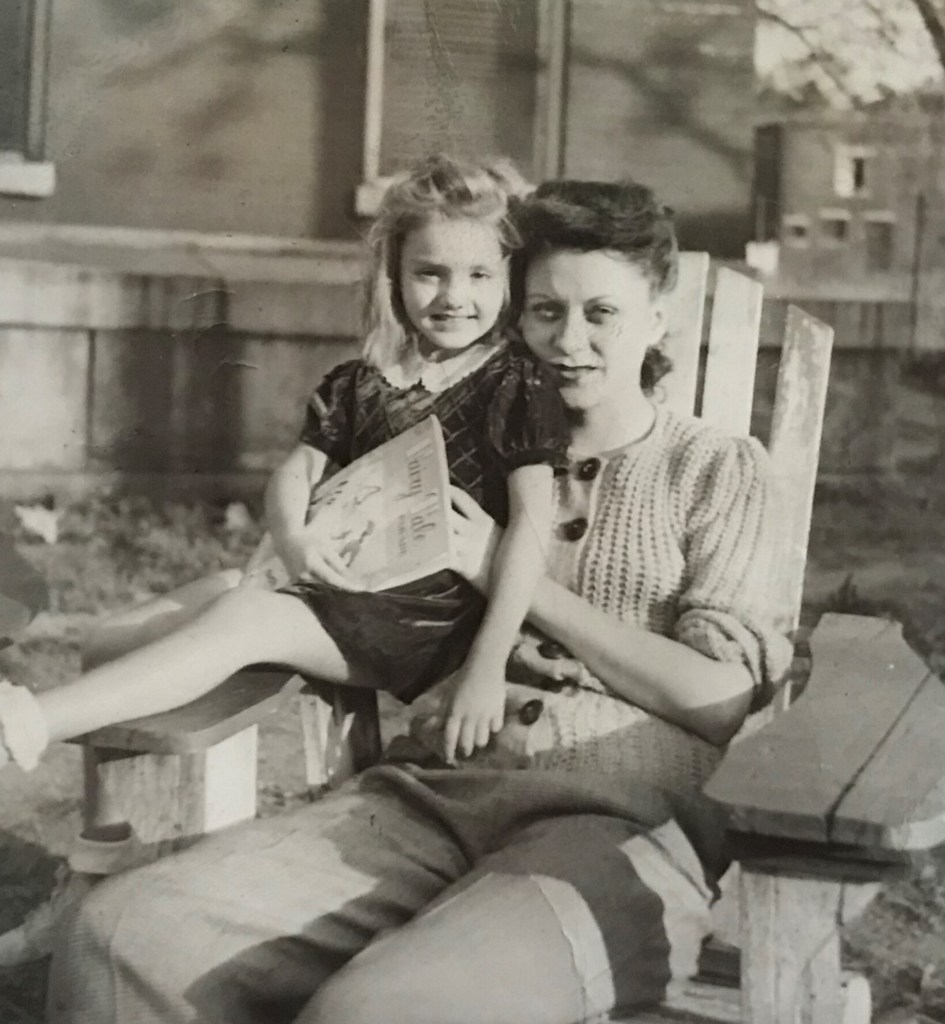
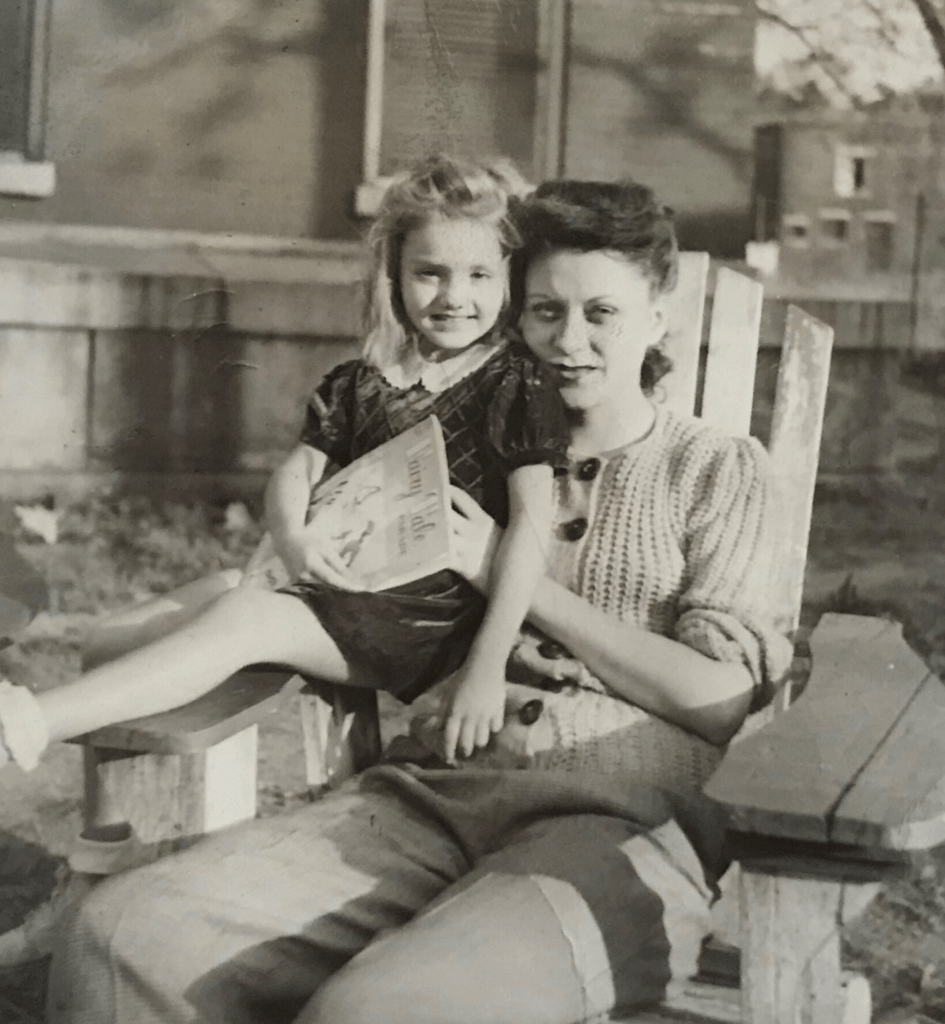
My mother Sylvia and my sister Suzanne.

But what I’ve been missing and searching for on that fundamental level has been my sister. The daughter my mother gave birth to before putting me up for adoption. My sister Suzanne.

It comforts me beyond measure that she was also looking for me. She knew I existed but, like me and my adopted family, her family was unwilling to either confirm or deny my existence. Suzanne and I were denied that gift by some need to keep secrets and obfuscate the truth by a generation that confronted guilt by hiding it under layers of denial.

Two days ago I had a long and enlightening meeting with my three nieces and nephew on ZOOM. While I sat in my office at home with my tablet they were in their homes in Maryland on their devices. I could see all of them and they could see each other and me. ZOOM was new to me and far clearer and more reliable than the SKYPE meetings I’ve had in the past. It’s a great tool.

So there was Kathy, Mary, Margaret and John. John had set the whole thing up and helped me understand how it works. Once a minor technical glitch was ironed out the entire meeting went without a hitch. I hadn’t slept well and had been a bit “tetchy” about the upcoming meeting and Anne had not only been understanding but very supportive while my nerves were clearly jangled. And they needn’t have been, of course. My new family welcomed me warmly.

That was on a Sunday afternoon in Maryland and a Monday morning here.

It’s now a Wednesday morning and it’s amazing how much can change in such a short time. On their Monday my niece Kathy visited her mother Suzanne in the nursing home she’d been in since 2018. She had what has been described to me as severe dementia or Alzheimer’s and she no longer speaks.

That makes what happened when Kathy visited her even more significant.

In a previous visit Kathy had read my letter to her and let her know the brother she’d been looking for so long had been found. Kathy and Suzanne were holding hands at the time and it appeared that Suzanne reacted by rubbing Kathy’s hand.

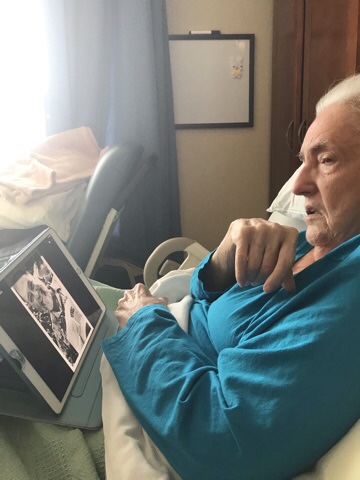
On this visit Kathy had her tablet and was able to show Suzanne some photos I’d sent her showing me at various stages in my life. Kathy had told her my name was Robert and when Suzanne saw one of the photos she said, “Robert.”

My sister Suzanne looking at a photo of me and saying “Robert.”

Her mother hadn’t spoken or reacted verbally for years. Kathy was so surprised that she asked the nursing home staff member who was in the room at the time if she had heard her mother speak. “She said Robert.”

After we kiss, say something loving and “God bless” we turn out our reading lights and pray. We both have a “healing prayer list” and I can often visualize and feel the person I’m praying for. But that only happens with people I’ve known and met. Last night it happened when I prayed for Suzanne. We connected and the part of me that had been missing had softly and lovingly fallen into place. For the first time in my life I was whole.

The missing link © Robert R. Feigel 2022 – All Rights Reserved

Neverending story …

If you haven’t visited my previous post about my adoption and the journey to find my biological family then it will be difficult to understand what a major breakthrough this is.

As those of you who have been following my journey will know, the family of my biological mother’s brother cut off communication with me once they discovered that my biological father wasn’t who they thought he was.

I may never know why and it makes little difference now anyway because the family of my mother’s daughter (my half-sister) and I have been communicating back and forth for the past ten days.

My sister, Suzzane, was born the year before my birth and her father was the man first thought to be my biological father: Melvyn Everett Hansen. According to records I’ve seen online, my mother and Mr Hansen had separated and divorced before I was conceived. That aside, my DNA results are conclusive and he wasn’t my biological father.

After my birth and adoption my mother remarried and Suzanne was adopted by my mother’s new husband. I’ll leave Suzanne’s story until after I’ve had a chance to speak with her three daughters and one son during the ZOOM meeting we’re in the process of setting up. Her story is as convoluted as mine, but I want to make sure it’s OK to share .

Using what scant information I could uncover using Google and various public records I was able to discover my sister’s name and after a lot of false starts and a very steep learning curve I discovered her married name and an address. I composed a letter I hoped wouldn’t be confronting and mailed it.

Around six months passed and I’d given up hope of ever hearing anything back when the letter was returned, unopened, and stamped by the US postal service as being “Undeliverable.”

While getting to know my fraternal family better I put that quest on the back burner until I started this book/blog and decided to do some further investigative work online. I found a new address, amended the letter somewhat and mailed the new letter earlier this year.

Around ten days ago I received a Facebook message and friend request from my nephew in Maryland letting me know the family had received the letter and that they’d be in touch soon. He’d just wanted me to know as quickly as possible that they’d received it.

Since then I’ve been in regular contact with a niece and we’ve exchanged a lot of information that has been enlightening for both of us. I won’t go into all that now because it’s a developing situation and I don’t want to share anything here that they don’t approve of first.

My sister Suzanne and my mother Sylvia.

A major part of The Mother Mystery has been solved because my niece sent me photos of both my mother and my sister, and it was quite an emotional experience to see, for the fist time, photos of my mother and sister.

There will be more to come once we’ve had our ZOOM meeting and gotten to know each other better. And even though setting up ZOOM and getting the webcam and microphone in working order is yet another learning curve to be climbed I’m excited about the next phase of the journey.

Neverending story © Robert R. Feigel 2022 – All Rights Reserved
Face to face with Prince Philip

d

In 1984 I was working as senior copywriter and producer at Auckland’s top rated radio station (Radio i) when I got a phone call from an old friend. He’d parlayed a successful career as a talk-radio host in San Francisco to becoming a top broadcast and print journalist and author. He called to ask me if I’d be interested in becoming NBC News’ reporter in New Zealand.

The reason NBC News wanted a NZ correspondent was due to the massive political upheaval that saw NZ’s conservative government headed by the pugnacious Robert Muldoon soundly defeated and replaced by a decidedly left wing Labour government headed by David Lange.

The new government had an antiwar, anti-nuclear policy that led to its refusal to let a US Navy vessel visit NZ unless the US government was willing to confirm it was carrying no nuclear weapons. The US refused to “either confirm or deny” and NZ declined permission for the visit. As a result the joint defense agreement between Australia, New Zealand and the Untied States (aka ANZUS) was considered to have been broken by New Zealand.

Ronald Reagan’s administration reacted – many say over-reacted – restricting certain NZ imports, imposing increased tariffs on others and withdrawing military cooperation between the US and NZ. NZ products like butter, cheese and lamb were banned in US supermarkets and what used to be a friendly relationship became hostile and, in my opinion, a bit childish – like the school yard bully flexing it’s muscles.

The period became known for the “ANZUS Row” and NBC News wanted someone on the ground to report on any escalation or any other news that would be of interest to an American audience.

As it turned out and thanks to more pragmatic and rational minds than political posturing the ANZUS was smoothed over out of the glare of media attention. But there were other news stories like the bombing and sinking of the Greenpeace “Rainbow Warrior” in Auckland Harbour that I covered from the morning of the bombing to the trial and sentencing of the two defendants, followed by their release to serve the remainder of their sentence in French Polynesia.

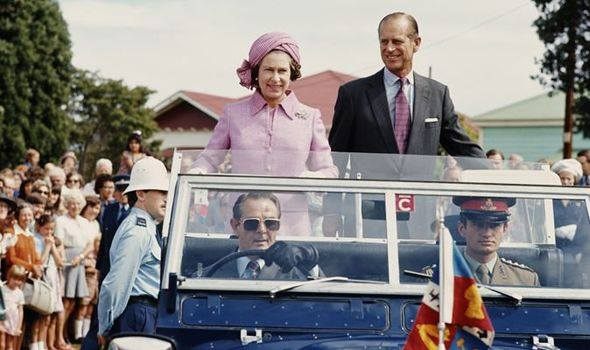
That’s another story. This is about the Royal Tour of HRH Queen Elizabeth II and Prince Philip in NZ in 1986.

I ran into Prince Philip – almost literally – during the Royal Tour of NZ in 1986. I was covering the tour for NBC News (in case there was an assassination attempt or any other juicy happenings) and standing in a large VIP crowd in Auckland’s Aotea Square talking to one of my former bosses at Progressive Enterprises. Doug had retired, become an Auckland City Council councillor and we were talking about old times before the company had been taken over by the Australian bean counters.

There was a lot of noise and I was trying to ignore the protesters on the other side of the cordon separating the official area from the public. Someone called my name and I stepped back, turned around only to be pushed gently but firmly out of Prince Philip’s way by one of the security detail as he and HRH Queen Elizabeth walked by slowly, waving at the crowd and smiling. The queen was turned the other way, but Philip and I were still quite close and he looked me over, smiled and shook his head like my father would have done had I’d done something naughty but amusing while he was watching.

Once they’d passed and were swallowed by the crowd Doug excused himself to follow along to some official meet and greet in the council building. I thought about heading back to my office a couple of blocks away or shifting to a nearby pub for a pint of their finest. I’m pretty sure what Prince Philip and Doug would have have preferred.

Paul Newman in orbit …

One of my myriad of part-time jobs was being in charge of the fruit and vegetable concession at the corner of Pacific Coast Highway and Topanga Canyon in Malibu. It was perfectly situated near the Feed Bin in an area where passing motorists could see it and find plenty of room to easily pull off either road and park. The owner would load up the truck at the markets in the wee-hours of the morning, set up on the corner and leave the rest for me to handle while he went off and took care of his other business interests. I only worked a few days a week, the money was good and I got to meet a lot of amazing people surrounded by the kind of food I liked eating while enjoying the sun and sea views.

Many of the customers were old friends and neighbors from Topanga Beach just across the highway. And many were regulars who would stop by on their ways home to Malibu and the canyon from work or from Malibu and Topanga Canyon back down the coast. Quite a few were tourists or visitors. It could be frenetically busy or totally quiet.

It was an quiet afternoon and not long before I’d call it a day and close up shop when an old, beat up older Mustang abruptly veered off the Pacific Coast Highway and skidded to a stop near the intersection instead of parking nearer the truck. I was starting to wonder if the driver was headed towards the truck or just waiting for someone when the driver’s door opened followed by the clatter empty beer can falling out from behind his seat and hitting the pavement as the driver pulled himself out.

In the moment of silence that followed the noise, the driver paused, looked briefly at the beer cans as a few more fell out, shook his head, adjusted his dark glasses and walked slowly, but deliberately towards where I was standing. He was wearing well worn jeans, a pair of well worn and dirty low rise boots, an oil stained T-shirt with a few holes and a worn old leather jacket that was reminiscent of an old bomber jacket without a fur collar. The dark glasses looked like aviator glasses. The driver’s door is still wide open and the cans still on the ground. I can see even more cans behind the seat.

He smiles, hooks an arm of the glasses over the neck of the T-shirt and says, “Never trust an empty beer can.” We both laugh. It’s Paul Newman and he’s going to buy some fruit and vegetables before he he continues on up the coast. I’ve been brought up around people in “the business” and have learned not to fawn or start talking about their movies. I’m there to sell fruit and veggies and so we talk about the weather and what’s good to eat. I am curious about the car and when I ask him if it’s his, he laughs again and tells me it’s one of many old cars he drives around so people don’t recognize him so easily.

I do smell some beer fumes but they’re not coming from his skin so I figure he’s not drunk. He’s totally in control and used to it. He’s easy to be with and doesn’t ask too many questions about me except to ask if I own he place. I answer no and he smiles again and comments that this must be a really good job out in the sun next to the beach. “Guess you meet a lot of different people,” he says. And when I when I say, “Well I’m meeting you” he laughs, puts out his hand, introduces himself as if I didn’t already know and asks my name.

He asks me to recommend the various fruits and vegetables on display and decides on the best of the best because he’s expected up the coast for dinner because he wants to arrive at wherever he’s headed with something useful and a bit special. He pays for it in cash and takes the change. No big noter tips from this guy.

The glasses go back on, he says “Good to meet you Bob … stay loose.” He puts the bags in the car, turfs the cans back behind the seat and gives me a brief salute before he fishtails out into the highway.

Having grown up in a place where it’s not uncommon to run into famous. and in some cases, unusually remarkable people, I’ve come to accept and appreciate that while our lives may revolve in different orbits, those orbits can overlap and sometimes even merge before continuing on their separate ways.

Years later I ran into him again while I was house-sitting the beach house owned by friends in the Malibu Colony. He was coming off their tennis court with Robert Redford and they were toweling off after what must have been a vigorous match. I was there checking up on another friend who was doing some landscaping work around the outside of the court and they both acknowledged us with smiles and nods before continuing up the private drive to wherever they were heading next in their orbits.

Orbits within orbits within a universe of orbits.

Paul Newman in orbit © Robert R. Feigel 2022 – All Rights Reserved

Surfing in Arizona? YES!

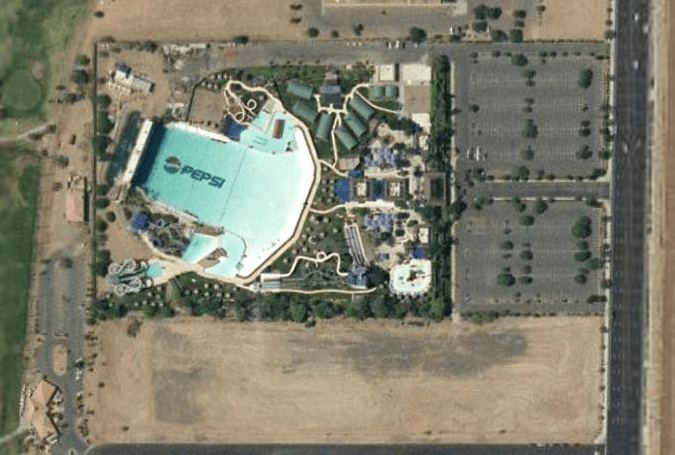
These days it’s not so unusual to find man-made waves inland from natural breaks on a coast. Arguably, some of the waves replicate the real thing so well, that due to their reliable shape and frequency, they offer more rides more often than a natural surf break. And these days you can find wave parks of various sizes and quality in Japan, Europe, Australia and around the continental USA.

That wasn’t the case when I visited the wave park described in a story I wrote many years ago and published on my surfwriter website. That fictional story, The King Of Mush Mountain was based on a real experience I had back in the early 1970s at a place called BIG SURF in Tempe, Arizona.

Like so many things in my life I followed my “little voice” and found myself having yet another adventure I’d have missed had I not been listening. This is the story behind The King Of Mush Mountain.

BIG SURF Arizona

One day I was out surfing at Old Joe’s in front of my friend, John Kiewit’s, parent’s house in the Malibu Colony when John’s father, Ralph, cruised by on his Hobie Cat and yelled out, “Hey Bob. Want to earn some money?”

At the time I was between jobs and waiting for the new job to start in a few weeks time. So the thought of earning some money had a certain appeal.

“Sounds good to me,” I shouted as he sailed past.

“Come up to the house later,” he yelled after he’d jibed and sailed past again.

Ralph owned one of the biggest construction companies in the country and wanted me to do a one-off job for him. I was to fly down to Florida, pick up a new Ford pick-up truck at a huge project his company was finishing off on the eastern coast of Northern Florida and drive it back to the company’s California headquarters. 

The pick-up had a locked reinforced steel box built into bed at the back of the cab and, cushioned in foam rubber, the box contained some newly developed laser surveying equipment that was worth several new pick-up trucks in those days. 

All my expenses would be paid, I’d be paid for driving the valuable equipment back and I had ten days to complete my mission. 

A two days later, Ralph handed me the airline ticket, an envelope containing a thousand dollars in twenty dollar bills and a credit card that I could use at gas stations.

“This should cover your expenses, but if you need more let me know and I’ll wire it to you,” said Ralph. “You can keep whatever you don’t spend and don’t bother with receipts except for gas.” Since cheap motel rooms were around $25 or less a night and food and drink could cost me less than $20 a day, I was on my way with a smile.

The flight down was memorable only because my connecting flight to Florida was delayed and I was put up in a tiny hotel room at the Dallas/Fort Worth airport overnight. The room was designed for pigmies. It featured a small, uncomfortable bed and a window that looked out onto a solid wall a few inches away. The airline paid for the room and my dinner. The food in the hotel was something you’d expect at a Denny’s and I didn’t get much sleep, wondering how I’d get out in the case of a fire.

The following morning the phone on the tiny desk in front of the useless window rang shortly after 4:00am and an enthusiastic voice informed me that my flight would be boarding in the not too distant future. I arrived in Jacksonville just a few hours later, was met by one of Ralph’s foremen, whisked away to the construction site near Jacksonville, handed the keys to the truck and started making my way back towards California before ten.

Before I left California I got an up-to-date AA road map and decided to return to California via Interstate 10 so I could visit New Orleans and a couple of other places. I figured I wouldn’t get another chance like this again.

From the construction site near the beach outside of Jacksonville I headed west across the bridge that connected to Interstate 10 and across the top of Florida until I reached Highway 231, hung a left down to Panama City and took the route along the Gulf Coast. As the sun started to set I found a small, funky motel, ate an amazing seafood dinner at an equally funky cafe and fell asleep to the sound of water lapping along the white sand beach.

The next morning I was up early and didn’t eat a late breakfast until I reached Biloxi, Mississippi where I made a complete fool of myself trying to chat up the waitress at a roadside cafe. After my second cup of coffee, I complimented her on her accent, adding that I really loved the way Southerners spoke. A first she just looked at me like I was crazy. Then she laughed and explained that she was actually German. And just in case I hadn’t got the message, she added that she’d met her husband while he was in the US Army stationed in Germany. Otherwise the breakfast was monumental. But it was clearly time to finish my coffee and be on my way.

Once I got to New Orleans I spent a lot of time looking around for a place to stay and settled for a small “hotel” near the French Quarter. I was able to park the pick-up on the street nearly directly in front and walk everywhere else. And walk I did.

In fact, I walked and partied and ate and drank and explored right through the night … and the next. I didn’t want to miss a minute of it and what I experienced and saw is another story in itself … even though much of it is so unbelievable that someone who hadn’t been to New Orleans in those days would consider it to be fiction. I’ll have to check on the statute of limitations.

In any event, I’d spent a few dollars during my two nights in New Orleans and was glad I’d taken along some extra money just for that purpose. But except for the alcohol, everything else was a lot cheaper than I’d budgeted for, including cover charges in the clubs.

After staggering out of New Orleans totally satiated, I reconnected with Interstate 10. Once I took a good long look at Baton Rouge, the going was fairly steady. I cut down on expenses by grabbing snacks at convenience stores, eating at fast-food places, stopping at places where I could sleep in my sleeping bag at the back of the pick-up and showered in public facilities at state parks.

There were some incidents along the way, like witnessing a fight between two gangs in a parking lot in Texas, but my only additional side trips were a quick visit to the Alamo in San Antonio and a memorable day enjoying Ciudad Juárez after leaving the pickup in a secured parking area in El Paso and walking over the border.

Otherwise, I drove from sunup to sunset … until I pulled off the highway and parked in front of a faux-adobe 7-eleven outside of Tempe, Arizona and went in to get a bean and cheese burrito and a beer to wash it down with.

As I stepped from the icy store back out into a blast of hot dry air, I was temporarily blinded by the glaring sun, blinked and thought I must be imagining things. Turing the corner of a nearby street were three boys on BMX bikes carrying small surfboards under their arms.

Curiosity got the better of me. I followed them and spent part of the day at the world’s biggest inland surfing beach described in the story. In real life it was called BIG SURF instead of Surf City. Except for that, the the story’s fictional Surf City was very similar to the real thing.

An aerial shot of BIG SURF taken from space.
Courtesy of G Scott Imaging.
Postcard showing BIG SURF on a busy day.

The Locals really did act as if they owned the place, the rest of the people really did look like they had been airlifted from a popular beach in Southern California and the board I rented was yellow. The girl who sold me my ticket smiled, the lard-assed ex-jock who took it from me was a jerk and my description of the wave machine is fairly accurate. Otherwise, the rest of the story pure fiction.

Drawing of the BIG SURF locals from G Scott’s excellent website/ Click on link for enlargement.
Courtesy of G Scott Imaging

(Click on this link for an enlargement of the drawing.)

Speaking of which, The King of Mush Mountain was my first attempt at writing surfing fiction – or anything else about surfing for that matter – since the demise of Surfguide Magazine and it’s vaguely reminiscent of Feigel Fables

I first started writing it when I was living in Costa Rica and in the intervening years I’ve tweaked it here and there. But it’s mostly sat with other unfinished typewritten stories in a box until I scanned it and transferred the text to my computer. I finally finished The King of Mush Mountain earlier this week – around 35 years later. (14 June 2007)

EPILOGE

After I returned the pickup to Ralph Kiewit’s HQ in the San Fernando Valley and driven back to Malibu, Ralph thanked me with another envelop with a $1,000 plus a $500 bonus for returning everything in perfect condition. These days I see laser surveying equipment advertised for sale for far lower prices than what I was paid when when the nearly $2,000 I ended up with is converted into today’s value. But Ralph and his wife Oralee were very generous to me over the years and always made me welcome in their home.

BIG SURF opened in 1969 and was a popular attraction for many years. With the development of more realistic wave pools the gentle mushy wave at BIG SURF was marketed as a “Waikiki Beach Wave” and surfboards were replaced with surfmats and the beach scene became more of a family scene.

After over 50 years as one of Tempe Arizona’s major attractions the restrictions during the pandemic has led to what may be the permanent closure of BIG SURF.

(Television news story on closure)

In the meantime, generations will remember what was one of the first, if not the first, inland surfing experience in the 70s and the fun they had visiting BIG SURF. I certainly will.

Surfing in Arizona? YES! © Robert R. Feigel 2022 – All Rights Reserved