
One of my early ambitions was to go to Hawaii. It started while watching the Harry Owens’ Show on television. Even thought it was in black and white the music, dancing, settings and Hilo Hattie fascinated me.
Once i got hooked on surfing in high school I wanted to go even more. I’d been working as a boxboy at a local supermarket and had saved up $500 so I figured I’d just buy one of those cheap tickets and fly over and live on the beach.
Of course I hadn’t reckoned on getting my parents’ permission. My mom and dad would have to agree and that rarely happened since they separated and divorced shortly after my 1st birthday. I was planning to just get on a plane an go without their permission.
Someone I knew from high school had decided to make a surfing movie. His idea was novel for the times. All the surfing movies around were 16mm films narrated live by the movie maker, with some accompanied by some music on tape. They’d be shown in school auditoriums or, for the major movies, in places like the Santa Monica Civic Auditoriums. They were usually sold-out.
But this movie was to be shot with 35mm film with a soundtrack. And it was to have a story about “hotdogging” in Southern California. The working title was “Hotdog On A Stick.”
My school acquaintance was looking for investors and since I knew some of the other people involved I invested my $500 and lost it when the project fizzled out. So it wasn’t until 10 years later that I was able to follow my dream to Hawaii after making a difficult decision in 1968.
The company my friend, Bill Cleary, and I had been working for was being sold to a group of businessmen who recognized the influence YARI (Young American Research Institute) and it’s publication the Young American Report had in the marketplace. All the major networks and major corporations like Ford, General Motors, Proctor & Gamble, Pepsi, Mattel, Paper Mate, Schick and even Dick Clark Enterprises were using our research to help them understand and exploit this growing but fickle “youth market.”
The company’s founder was none other than Larry Stevenson, the same man who kickstarted what was termed the “skateboard craze” with his Makaha Skateboards and skateboard team, published SurfGuide Magazine and created the popular “Surf Fair” and “Teen Fair” exhibitions. If anyone understood the youth market it was Larry. But the key was scientifically based market research and nobody had done that before with this new market. Young American Research Institute’s director was the head of the market research department at the UCLA graduate school of business. It was unique and some big players wanted it for themselves.
One of the big players was Patrick J. Frawley, the founder of the Paper Mate pen company and the boss of Schick. Another was wealthy businessman and founder of the John Birch Society, Robert W. Welch Jr. The third was a wealthy businessman and member of the John Birch Society whose name was never mentioned. The three were buying the company.
Bill and I were informed that things would essentially remain the same. Business as usual … except our offices would be moved to one of newly built twin multi-story tower buildings overlooking the freeways in downtown Los Angeles.
Our current offices were in a beautiful little single story Mexican-style office complex in Santa Monic where we looked out on a lovely patio with trees, stone benches and and a fountain. The new office would be in one of two black glass towers.
Shortly after the announcement Robert F. Kennedy was murdered in Los Angeles after a successful campaign appearance at the Ambassador Hotel. Even though I was a registered Republican (like my parents) I was deeply affected by JFK’s murder and was planning on voting for RFK if he got the nomination. Along with millions of others, I was stunned.
The first to jump ship was my friend Bill. I’d been working under him as assistant editor and learned that I’d retain that position when we moved. We’d been promised “corner offices,” in a building that was more or less round. We’d also been promised our own, dedicated secretary and office machines. We both had been offered substantial salary increases, parking spots and other inducements designed to make up for the long commutes from Topanga Canyon where I rented and Bill and his wife owned a lovely home. But now that Bill had tendered his resignation I had to consider my options.
While it was Bill who’d met with the new owners I was left out of that meeting because I was simply Bill’s right hand man. Now I was summoned to a meeting where I was offered Bill’s job. I’d be the new editor of Young American Report with the salary hike and perks Bill had been offered. I’d also have the exclusive use of a company car since my VW Bus was hardly the kind of transport they wanted their editor to be parking next to them.
WOW!
It was all getting quite real and I needed to make a decision quickly.
It took me a couple of days to weigh up all the options. Since I could afford a much higher rent than I’d been able to pay previously I could either move closer to downtown LA or simply put up with the daily commute from Topanga Canyon or Malibu. Even Santa Monica was an option.
On the other hand, I’d be spending less and less time near the beach and my friends. I called Bill to discuss it.
Bill told me what he didn’t tell them. The reason he turned down the offer. He always called me “Fig” when we discussed anything personal. His wife and I had been friends for years. Close friends.
“Fig … do you know who these hombres are? They are the enemy.” He waited for me to catch up. “They want the company so they can use it to influence the market, not understand it. They want to manipulate the research to support their agenda … and that agenda is so far right it’s scary.”
To be honest I hadn’t considered any of this. I was focused on things like salary, cars and being the editor in a corner office.
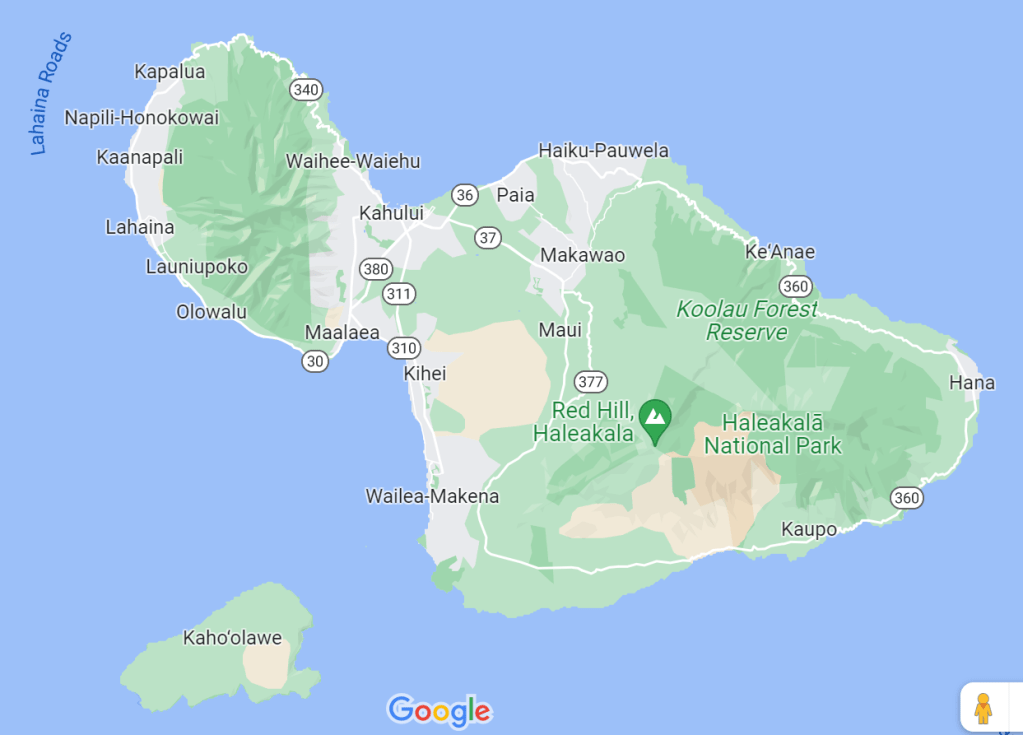
While all of this put a new perspective on the job what happened next made an even bigger impact. A surfing friend who’d gone to Hawaii dropped in on his was back to the Islands. His name was Ron Brown and he described his lifestyle while living on Maui and invited me to move into the house he and a couple of other guys rented. It sounded like paradise.
By the time he left the office I’d made up my mind. I tendered my resignation and started selling off the things I couldn’t take with me. I traded my VW Bus for a Plymouth station wagon and a Kawasaki 125 dirt bike. I sold my stereo and tape recorders. Most of my books went to friends and I only kept a couple of favorites. The last thing I sold before buying my ticket was the station wagon because I didn’t need that either. But before I did I used it to take my dirt bike down to San Pedro where I consigned it to a Matson ship to be delivered to Maui.
After wrapping my surfboard in a couple of wool blankets and checking it in to a Pan Am flight I was on my way to Maui where my friend picked me up from the airport where my Maui Chronicles begin.
The Maui Chronicles © Robert R. Feigel 2022 – All Rights Reserved
 Pieces from a Puzzling Life